Imagine a snack that does not merely crumble but structurally fails upon impact with your molars; a geometric marvel where the tensile strength of the grain meets the brittle snap of a high-performance ceramic. This is not just a snack. This is an architectural triumph of Seed Matrix Adhesion. When we talk about the Oatmeal Cracker Fiber, we are discussing the very scaffolding of flavor. Most crackers are pathetic, soggy cardboard rectangles that lack the backbone to support a robust dip or a sharp cheddar. We are here to rectify that culinary negligence. We are engineering a disk that utilizes the viscous properties of hydrated oats to create a cross-linked network of fiber and seed. The sensory experience starts with the tactile resistance of the crust, followed by a piquant burst of toasted sesame and flax, ending in a clean, crystalline finish. We are optimizing for crunch, for structural integrity, and for a nutritional profile that reads like a bio-hacker's dream. Prepare your workstations; we are about to render ordinary crackers obsolete.
THE DATA MATRIX
| Metric | Specification |
|---|---|
| Prep Time | 15 Minutes |
| Execution Time | 45 Minutes |
| Yield | 48 High-Density Disks |
| Complexity | 4/10 |
| Estimated Cost per Serving | $0.22 |
THE GATHERS
Ingredient Protocol:
- 240g / 2 cups Steel-Cut Oatmeal Cracker Fiber (Pulse in a blender for 5 seconds to achieve a uniform grit)
- 125g / 1 cup Sunflower Seeds (Raw and hulled)
- 60g / 0.5 cup Flax Seeds (Whole, for structural binding)
- 30g / 0.25 cup Black Sesame Seeds (For visual contrast and oil content)
- 5g / 1 tsp Sea Salt (Fine grain for even distribution)
- 15ml / 1 tbsp Maple Syrup (To assist in the Maillard reaction)
- 475ml / 2 cups Boiling Water (To hydrate the mucilaginous fibers)
- 30ml / 2 tbsp Extra Virgin Olive Oil (To infuse the matrix with lipids)
Section A: Ingredient Quality Audit:
If your seeds smell like a dusty attic, they have oxidized. Throw them out. Rancid lipids will destroy the flavor profile. If your Oatmeal Cracker Fiber is too coarse, it will fail to form a cohesive dough; the solution is to pulse the dry mix in a high-speed blender until it resembles coarse sand. If the water is not at a rolling boil when added, the flax and oat fibers will not release their natural gums, resulting in a cracker that shatters into dust rather than snapping into clean shards.
THE MASTERCLASS
1. Thermal Activation of the Matrix
Place your dry ingredients into a large stainless steel bowl. Use a digital scale to ensure precision, as the ratio of water to fiber is the difference between a crisp wafer and a gummy mess. Pour the boiling water over the mixture and stir vigorously with a silicone spatula.
Pro Tip: The science here is hydrocolloid activation. The boiling water triggers the release of beta-glucans in the Oatmeal Cracker Fiber and mucilage in the flax seeds, creating a viscous slurry that acts as a natural, gluten-free glue.
2. Lipid Infusion and Resting
Add the olive oil and maple syrup to the hydrated mass. Incorporate thoroughly. Cover the bowl with a damp cloth and let it sit for 10 minutes.
Pro Tip: Resting allows for total hydration of the seed hulls. Using a saucier to pre-warm the oil and syrup can help them integrate more smoothly into the dense fiber network, ensuring every seed is coated in a thin layer of fat for better heat conduction.
3. Precision Compression
Divide the dough between two sheets of high-quality parchment paper. Use a heavy rolling pin to flatten the mixture until it is no more than 3mm thick.
Pro Tip: Uniformity is your god now. Use a bench scraper to square off the edges of the dough before rolling. If the thickness varies, the edges will carbonize while the center remains a flaccid disappointment.
4. The Scoring Protocol
Remove the top layer of parchment. Use a pizza cutter or a bench scraper to score the dough into 2-inch squares. Do not cut all the way through; just create a fault line for post-bake separation.
Pro Tip: Scoring creates "stress concentrators." When the moisture evaporates during the bake, the cracker will naturally want to shrink; these lines ensure it breaks in a controlled, aesthetic manner.
5. Dehydration and Maillard Optimization
Bake at 150C / 300F for 35 to 45 minutes. Halfway through, rotate the pans 180 degrees to account for oven hot spots.
Pro Tip: We are baking at a lower temperature to render out the moisture without burning the delicate seed oils. Use an infrared thermometer to check the surface temperature of your baking stone if you are using one; it should be consistent across the entire plane.
Section B: Prep & Timing Fault-Lines:
The most common human error is impatience. If you pull these out while the center is still slightly soft, they will become chewy within an hour. The crackers must be "crisp-dry" to the touch before leaving the oven. If your oven runs hot, the seeds might develop a bitter, over-toasted note; calibrate your appliance with an internal thermometer to ensure you are not exceeding the smoke point of the olive oil.
THE VISUAL SPECTRUM
Section C: Thermal & Visual Troubleshooting:
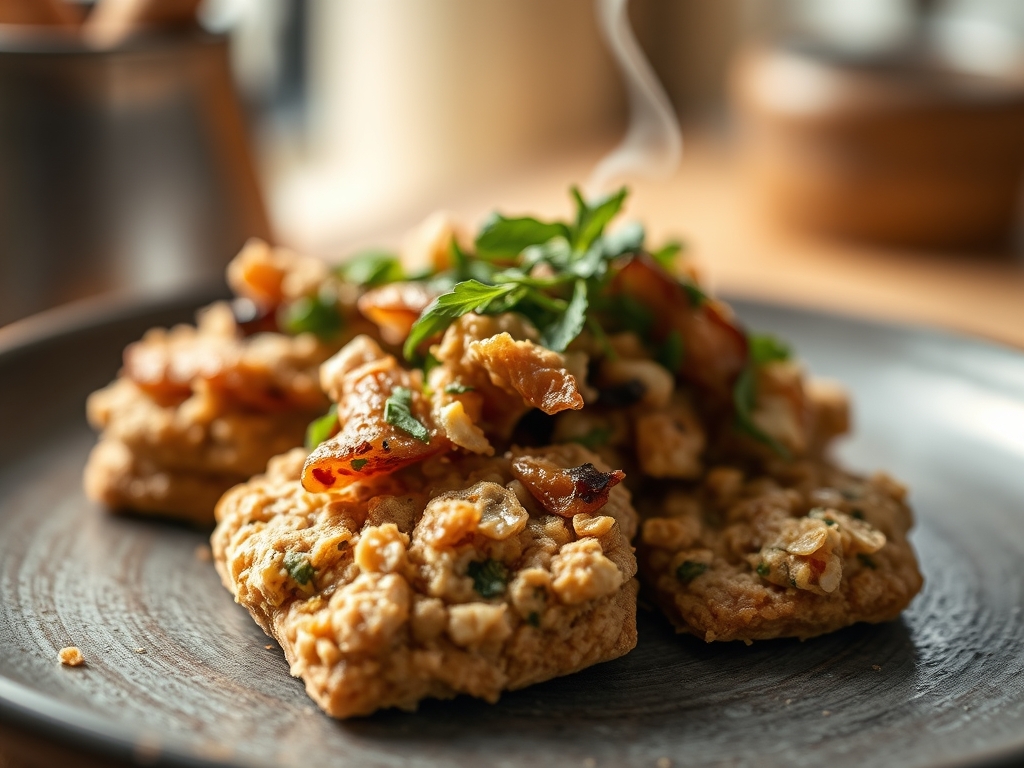
Look at the Masterclass photo. Notice the golden-brown hue and the way the seeds are suspended in a translucent, amber-colored webbing. If your crackers look pale and "floury," you skipped the maple syrup or failed to reach the proper internal temperature for the Maillard reaction. If the seeds are falling off the cracker, your Oatmeal Cracker Fiber was too dry; you must increase the water ratio next time. Dull colors usually indicate old seeds with low oil content. The final product should have a slight sheen, indicating that the lipids have successfully migrated to the surface during the thermal cycle.
THE DEEP DIVE
Macro Nutrition Profile:
These disks are a powerhouse of slow-burning carbohydrates and healthy fats. Per serving (3 crackers), you are looking at approximately 140 calories, 5g of protein, 9g of fat (mostly monounsaturated), and 4g of dietary fiber. The Oatmeal Cracker Fiber provides a steady release of glucose, preventing the dreaded mid-afternoon energy crash.
Dietary Swaps:
- Vegan: Already compliant.
- Keto: Replace the Oatmeal Cracker Fiber with almond flour and increase the flax content, though the structural integrity will decrease.
- GF: Ensure your oats are certified gluten-free to avoid cross-contamination.
Meal Prep & Reheating Science:
To maintain the molecular structure, store these in an airtight glass container with a desiccant pack if you live in a high-humidity environment. If they lose their snap, do not use a microwave; the radiation will agitate the water molecules and turn the fiber into mush. Instead, flash-bake them at 350F for 3 minutes to aerate the matrix and restore the brittle texture.
THE KITCHEN TABLE
Why are my crackers shattering when I cut them?
You are likely cutting them after they have cooled. You must score the dough while it is still raw and wet. Once the thermal setting occurs, the Oatmeal Cracker Fiber becomes a rigid lattice that resists clean cuts.
Can I substitute the maple syrup?
You can use honey or agave, but maple syrup provides the specific sugars necessary for a superior Maillard reaction at lower temperatures. This ensures a deep, toasted flavor without the risk of scorching the seeds.
What is the shelf life of these disks?
In an airtight container, they will remain structurally sound for up to two weeks. The high fiber and low moisture content inhibit microbial growth, though the seed oils will eventually oxidize if exposed to light and air.
My crackers are sticking to the parchment paper!
This happens if the dough was too wet or if you used cheap, non-silicone-coated paper. Ensure you are using professional-grade parchment. If sticking occurs, let them cool completely; the contraction usually releases the bond.