Listen to the sound of the bench scraper hitting the maple block; it is the heartbeat of a functional kitchen. We are not merely making dinner; we are engaging in a high-stakes structural engineering project where the primary metric of success is Tagliatelle Elasticity. When you pull a strand of fresh pasta, it should resist. It should possess a muscular snap that defies the gravity of the boiling water. This is the result of a precise molecular alignment of gliadin and glutenin proteins. If your pasta resembles a limp, waterlogged ribbon, you have failed the audit. We demand a texture that is toothsome and resilient; a surface that is porous enough to grab a viscous ragu but structurally sound enough to maintain its integrity under thermal stress. We are hunting for that golden, translucent sheen that signals a perfect hydration ratio. Forget the mushy noodles of your childhood. We are here to build a carbohydrate infrastructure that can support the heaviest sauces without buckling under the pressure of a single fork twist.
THE DATA MATRIX
| Metric | Specification |
|---|---|
| Prep Time | 45 Minutes |
| Execution Time | 10 Minutes |
| Yield | 4 Servings |
| Complexity (1-10) | 7 |
| Estimated Cost per Serving | $1.85 |
THE GATHERS
Ingredient Protocol:
- 400g / 3.25 cups Double Zero (00) Flour (High extensibility)
- 4 Large Pasture-Raised Egg Yolks (Rich in lecithin)
- 2 Large Whole Eggs (For structural moisture)
- 5ml / 1 tsp Extra Virgin Olive Oil (To lubricate the matrix)
- 3g / 0.5 tsp Fine Sea Salt (To tighten the protein bonds)
Section A: Ingredient Quality Audit:
Sub-par raw materials are the silent killers of Tagliatelle Elasticity. If your flour has a low protein content (below 11 percent), the dough will lack the tensile strength required for thin rolling. Technical Fix: Incorporate 10g of vital wheat gluten to fortify the structure. If your eggs are pale and watery, the pasta will look anemic. Technical Fix: Use eggs with deep orange yolks or add a pinch of turmeric to the flour to mimic the golden hue of high-quality beta-carotene. If the dough feels gritty, your salt crystals are too large. Technical Fix: Dissolve the salt into the egg mixture before incorporating the flour to ensure even distribution and prevent micro-tears in the gluten sheets.
THE MASTERCLASS
1. The Flour Well Architecture
Empty your flour onto a clean marble or wood surface. Use the bottom of a measuring cup to create a wide, stable crater. This is your containment vessel. Pour your whisked eggs into the center.
Pro Tip: Use a digital scale for the flour rather than volume measurements. Humidity affects how flour packs; weight is the only constant. Precise hydration is the foundation of Tagliatelle Elasticity.
2. The Initial Emulsification
Using a fork, begin whisking the eggs in the center of the well, slowly drawing in small amounts of flour from the inner walls. Do not breach the perimeter. You are creating a thick paste before the final integration.
Pro Tip: This stage allows the fats in the yolk to infuse with the starch before the heavy gluten development begins. A bench scraper is essential here to keep the edges tidy and prevent egg "blowouts" across your workstation.
3. The Kneading Protocol
Once a shaggy mass forms, discard any dry, crusty bits that refuse to integrate. Knead the dough by pushing it away with the heel of your hand, folding it back, and rotating. Continue for 10 full minutes until the surface is smooth as a river stone.
Pro Tip: You are looking for the "spring-back" test. Poke the dough; if it indents and stays, the gluten is not yet developed. If it pushes back, the Tagliatelle Elasticity is beginning to form at a molecular level.
4. The Hydration Sabbatical
Wrap the dough tightly in plastic wrap and let it rest at room temperature for at least 30 minutes. This allows the flour to fully hydrate and the gluten network to relax so it can be rolled without snapping back.
Pro Tip: Skipping the rest period results in a dough that fights the roller. A relaxed dough allows for thinner sheets, which ensures the pasta will render perfectly when it hits the salted boiling water.
5. The Precision Reduction
Divide the dough and run it through a pasta machine, starting at the widest setting. Fold it over itself (lamination) for the first three passes to further align the fibers. Gradually move to the thinnest setting until you can see the shadow of your hand through the sheet.
Pro Tip: Dust the sheets with semolina flour, not 00 flour, between passes. Semolina acts like ball bearings, preventing sticking without being absorbed into the dough and ruining your hydration ratio.
Section B: Prep & Timing Fault-Lines:
The most common human error is the "Dry-Out." If you leave rolled sheets exposed to the air for too long before cutting, they become brittle. Fix: Keep unused dough under an inverted bowl. Another failure point is the "Crowded Pot." Cooking too much pasta in too little water drops the temperature and leads to a gummy, viscous starch buildup. Fix: Use at least 4 liters of water per 500g of pasta and maintain a rolling boil to keep the strands in constant motion.
THE VISUAL SPECTRUM
Section C: Thermal & Visual Troubleshooting:
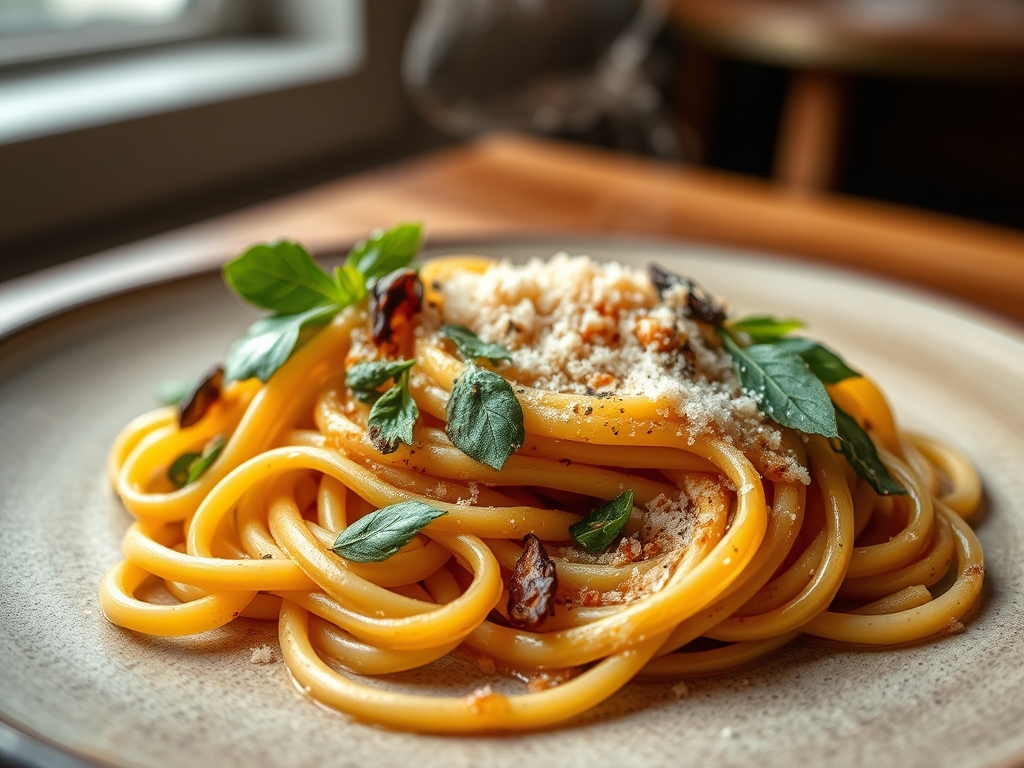
Referencing the Masterclass photo, your finished ribbons should exhibit a distinct "al dente" spine; a slightly paler core surrounded by a translucent exterior. If the color is dull or grey, your eggs were oxidized or your flour was stale. If the edges are frayed (the "sawtooth" effect), your dough was too dry during the cutting phase. Correct this by misting the dough with a fine water spray before the final roll. If the pasta clumps together in the bowl, you failed to deglaze the pan with enough pasta water to create a silky emulsion with your sauce. The visual cue for success is a "nest" that holds its shape on the plate rather than collapsing into a heap.
THE DEEP DIVE
Macro Nutrition Profile:
A standard serving (100g) of fresh egg tagliatelle provides approximately 290 calories, 12g of protein, 5g of fat, and 48g of complex carbohydrates. The high egg-to-flour ratio increases the bioavailability of essential amino acids and choline compared to dry, water-based pasta.
Dietary Swaps:
- Vegan: Replace eggs with a slurry of 1 part silken tofu and 1 part water, though you will sacrifice some Tagliatelle Elasticity.
- Keto: Utilize almond flour and xantham gum; however, the structural integrity will rely on binders rather than gluten.
- GF: A blend of rice flour and tapioca starch works best, but requires an extra egg yolk to provide the necessary fat for a smooth mouthfeel.
Meal Prep & Reheating Science:
To preserve the molecular structure, flash-freeze fresh nests on a baking sheet before transferring them to a vacuum-sealed bag. When reheating, never microwave. Instead, drop the frozen nests directly into boiling water for 90 seconds. This prevents the starch from recrystallizing into a rubbery texture.
THE KITCHEN TABLE
Why is my pasta snapping during the boil?
This indicates over-kneading or insufficient hydration. The gluten network became too brittle. Next time, add a teaspoon of water during the initial mix to ensure the dough remains supple enough to handle the thermal expansion of boiling.
Can I use a food processor for the dough?
Yes, it is efficient for the initial mix, but it cannot replace the manual kneading required for true Tagliatelle Elasticity. Use the pulses to create crumbs, then finish by hand to feel the protein development.
How much salt should be in the water?
The water should be "seasoned like the sea." This is not just for flavor; salt limits starch gelatinization, which helps the pasta maintain its structural integrity and prevents the exterior from becoming unpleasantly viscous or slimy.
What is the best way to store fresh leftovers?
Toss the cooked pasta in a light coating of oil to prevent sticking and store in an airtight container for up to two days. Reheat by tossing in a hot saucier with a splash of water to re-emulsify the fats.