The air in a high-performance bakery does not just smell like sugar; it vibrates with the scent of fermenting yeast and the high-octane aroma of browning lipids. We are not merely baking. We are conducting a structural audit of the Pain au Chocolat. This is the pinnacle of laminated engineering. It is a dual-core protein delivery system where shards of shattered pastry meet the dark, viscous heart of semi-sweet cocoa. When you bite into a perfect specimen, the sound should resemble a controlled demolition. The exterior crust must shatter into a thousand golden fragments, revealing a honeycomb interior that is simultaneously airy and rich. We are looking for the Maillard reaction in its most aggressive form. We want deep mahogany hues and a butter content so high it defies the laws of solid-state physics. If your pastry is flaccid or doughy, you have failed the audit. If the chocolate has not reached a state of molten perfection, your infrastructure is compromised. Prepare your station. We are about to render flour and fat into architectural gold.
THE DATA MATRIX
| Metric | Specification |
|---|---|
| Prep Time | 45 Minutes (Active) |
| Execution Time | 18 – 24 Hours (Including Proofing/Chilling) |
| Yield | 12 Units |
| Complexity (1-10) | 9 (Structural Precision Required) |
| Estimated Cost per Serving | $1.25 – $1.75 |
THE GATHERS
Ingredient Protocol:
- 500g / 4 cups All-Purpose Flour (High protein content preferred)
- 60g / 0.25 cups Granulated Sugar
- 10g / 2 tsp Fine Sea Salt
- 10g / 1 tbsp Instant Dry Yeast
- 300ml / 1.25 cups Whole Milk (Chilled to 4 degrees Celsius)
- 250g / 1.1 cups Unsalted European-Style Butter (Minimum 82% butterfat)
- 24 Chocolate Batons (High-quality semi-sweet, 44% cocoa minimum)
- 1 Large Egg (For the protein-glaze wash)
Section A: Ingredient Quality Audit:
If your butter feels waxy or has a high water content, your lamination will fail. Low-quality butter will emulsify into the dough rather than forming distinct layers. To fix this, always source European-style butter with high fat-to-water ratios. If your yeast is sluggish, the dough will not aerate properly during the final proof. Test your yeast in warm milk before proceeding; if it does not foam within five minutes, discard and replace. For flour, avoid bleached varieties. You need the structural integrity of unbleached, high-protein flour to support the heavy butter load without collapsing the honeycomb matrix.
THE MASTERCLASS
1. The Detrempe Formation
Combine flour, sugar, salt, yeast, and chilled milk in a stand mixer. Mix on low speed until a cohesive dough forms. Do not overwork the gluten at this stage. You want a supple base that can withstand the mechanical stress of rolling. Use a digital scale for every measurement; volumetric guessing is the enemy of the Pain au Chocolat.
Pro Tip: Keeping the milk chilled prevents the yeast from over-activating during the mixing phase, which preserves the sugar for the long fermentation process.
2. The Butter Block Construction
Place your chilled butter between two sheets of parchment paper. Use a heavy rolling pin to pound it into a flat, 15cm square. It must be pliable but cold. If it shatters, it is too cold; if it smears, it is too warm. Use a bench scraper to keep the edges perfectly square.
Pro Tip: The goal is to match the plasticity of the butter to the plasticity of the dough. This ensures they roll out at the same rate without the butter breaking through the dough layers.
3. The Lamination Sequence
Encase the butter block in the dough and perform three "letter folds." This creates the hundreds of microscopic layers required for the signature shatter. Chill the dough for at least 30 minutes between every single turn. This allows the gluten to relax and the butter to firm up.
Pro Tip: Use a bench scraper to remove excess flour between folds. Residual flour prevents the layers from bonding, leading to a "gapping" defect in the final bake.
4. Precision Cutting and Loading
Roll the final laminated sheet to a thickness of 4mm. Cut into rectangles approximately 8cm by 15cm. Place one chocolate baton at the edge, roll once, place the second baton, and finish the roll. This dual-core loading ensures chocolate is present in every bite.
Pro Tip: Use a pizza wheel or sharp chef knife for clean cuts. Tearing the dough at the edges seals the layers together, which will prevent the pastry from rising vertically.
5. The Final Proof and Thermal Execution
Proof the pastries at 25 degrees Celsius for 2 hours. They should wobble like gelatin when shaken. Brush with a thin egg wash and bake at 200 degrees Celsius for 15 to 18 minutes. The high heat causes the water in the butter to flash into steam, forcing the layers apart.
Pro Tip: Use an infrared thermometer to check your oven's true temperature. Most home ovens fluctuate wildly, which can ruin the delicate expansion of the laminated layers.
Section B: Prep & Timing Fault-Lines:
The most common human error is rushing the chilling phases. If the dough is not sufficiently rested, it will "shrink back" during rolling, resulting in a tough, bread-like texture rather than a light pastry. If the proofing environment is too hot (above 28 degrees Celsius), the butter will melt out of the layers before the dough sets, leaving a greasy puddle on your baking sheet. Use a saucier filled with warm water inside a turned-off oven to create a controlled proofing chamber if your kitchen is too cold.
THE VISUAL SPECTRUM
Section C: Thermal & Visual Troubleshooting:
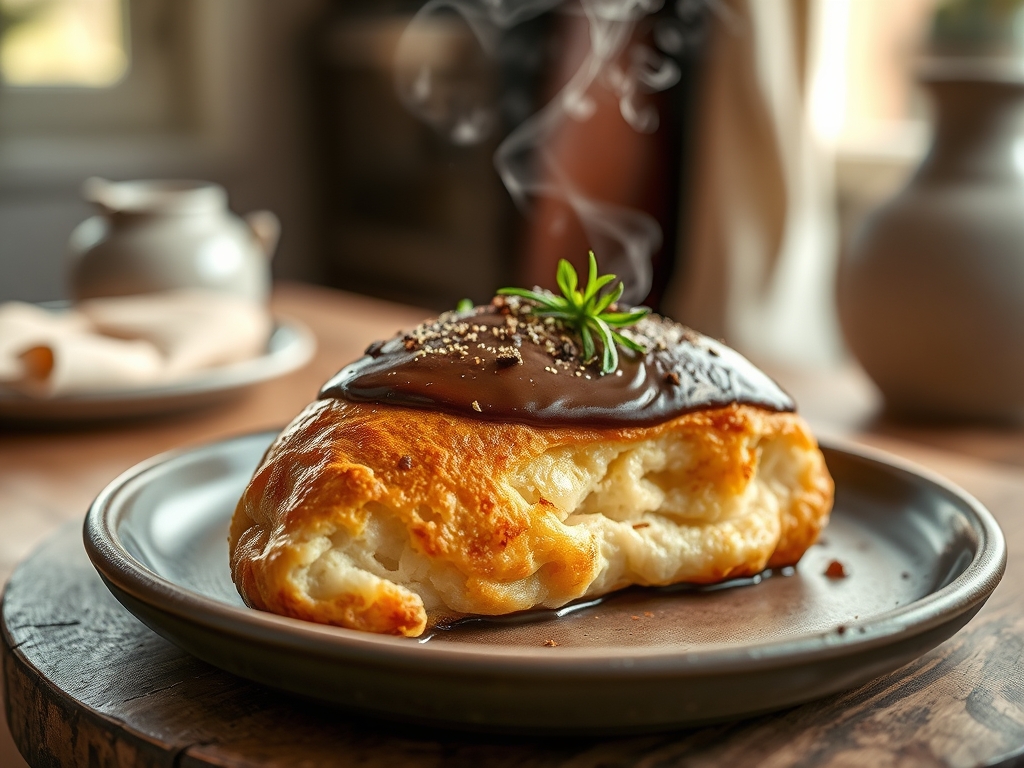
Referencing the Masterclass photo, the exterior should exhibit a "tiger-stripe" pattern of deep bronze and golden tan. If your Pain au Chocolat is a uniform pale yellow, the Maillard reaction was stunted; increase your oven temperature by 10 degrees. If the ends look "pinched" rather than showing clear, visible layers, your cutting tool was dull. If the chocolate has leaked out, the roll was too loose. The internal crumb should show a "beehive" structure. Large, uneven holes indicate over-proofing, while a dense, gummy center suggests the dough was under-baked or the lamination layers were crushed during the rolling process.
THE DEEP DIVE
Macro Nutrition Profile:
A single high-performance Pain au Chocolat contains approximately 350-420 calories. The profile is dominated by lipids (fats) from the high butter content, followed by complex carbohydrates and a moderate hit of protein from the flour and egg wash. While not a "health food," the satiety index is high due to the density of the fats.
Dietary Swaps:
- Vegan: Replace butter with a high-quality plant-based laminate (look for shea or cocoa butter bases) and use soy milk for the detrempe.
- Keto/GF: These are extremely difficult for lamination as gluten is the "glue" that holds the layers. However, almond flour blends with xantham gum can mimic the structure, though the "shatter" will be significantly reduced.
Meal Prep & Reheating Science:
To maintain the molecular structure, never microwave a Pain au Chocolat. This turns the fat into a viscous liquid that soaks the dough, destroying the crispness. Instead, reheat in a 175-degree oven for 5 minutes. This re-crisps the exterior while gently softening the internal chocolate core without compromising the lamination.
THE KITCHEN TABLE
Why is my pastry greasy on the bottom?
The proofing temperature was too high, causing the butter to melt out of the layers before baking. Keep the environment under 27 degrees Celsius to ensure the butter stays solid until it hits the oven.
Can I use chocolate chips instead of batons?
You can, but the structural integrity suffers. Batons provide a solid "spine" for the dough to wrap around, ensuring an even shape. Chips tend to scatter and can cause the pastry to collapse or leak.
How do I get that professional shine?
The secret is a double-strained egg wash. Whisk an egg with a splash of heavy cream and a pinch of salt, then pass it through a fine-mesh sieve to remove any viscous chalazae for a perfectly smooth finish.
Why didn't my layers separate?
This is usually caused by "over-working" the dough or letting the butter get too soft during the folding process. If the butter and dough merge into one mass, the steam cannot force the layers apart.
How long does the dough last in the fridge?
You can hold the laminated dough for up to 48 hours. In fact, a longer cold ferment often improves the flavor as the yeast has more time to infuse the dough with complex organic acids.