Stop thinking about pasta as a structural monolith. When you step into the world of authentic Nihon Soba, you are no longer dealing with the forgiving, elastic safety net of wheat gluten. You are performing a high-stakes Buckwheat Soba Audit on a dough that wants to crumble, shatter, and fail. This is the grey noodle: a stoic, earthy masterpiece that relies on the precise mechanical manipulation of starch rather than the stretchy protein chains of the West. The aroma is nutty and deep; the texture is a paradoxical "tooth-snap" that vanishes into a silky finish. We are here to master the Ni-Hachi ratio, where twenty percent wheat acts as the structural scaffolding for eighty percent buckwheat. It is a delicate dance of hydration and friction. If your water temperature is off by five degrees, the dough dies. If your rolling pressure is uneven, the noodles snap in the pot. Prepare your bench scraper and clear your mind. We are building a technical infrastructure out of nothing but seed flour and water.
THE DATA MATRIX
| Metric | Specification |
|---|---|
| Prep Time | 25 minutes |
| Execution Time | 45 minutes |
| Yield | 4 Servings |
| Complexity (1-10) | 8.5 |
| Estimated Cost per Serving | $1.75 |
THE GATHERS
Ingredient Protocol:
- 400g / 3.2 cups Stone-ground Buckwheat Flour (Sobako)
- 100g / 0.8 cups High-Protein Bread Flour (20% ratio for binding)
- 240ml / 1 cup Filtered Water (Room temperature, adjusted by humidity)
- 15g / 1 tbsp Uchiko (Coarse buckwheat flour for dusting; do not use wheat)
- 100ml / 0.4 cups Tsuyu Base (Dashi, mirin, and soy sauce infusion)
- 5g / 1 tsp Wasabi Paste (Real Wasabi Japonica preferred)
Section A: Ingredient Quality Audit:
The primary failure point in a Buckwheat Soba Audit is the age of the flour. Buckwheat contains volatile oils that oxidize rapidly. If your flour smells like dusty cardboard rather than toasted nuts, the viscous quality of the starches will be compromised. Technical Fix: Always source "Shin-soba" (new crop) flour and store it in an airtight container in the freezer. If the flour feels too gritty, pass it through a fine-mesh sieve twice to aerate the particles. If your bread flour has a protein content lower than 12 percent, the "Ni-Hachi" structure will collapse. Supplement with 5g of vital wheat gluten if using standard all-purpose flour to ensure the structural integrity of the grey noodle infrastructure.
THE MASTERCLASS
1. The Hydration Phase (Mizumawashi)
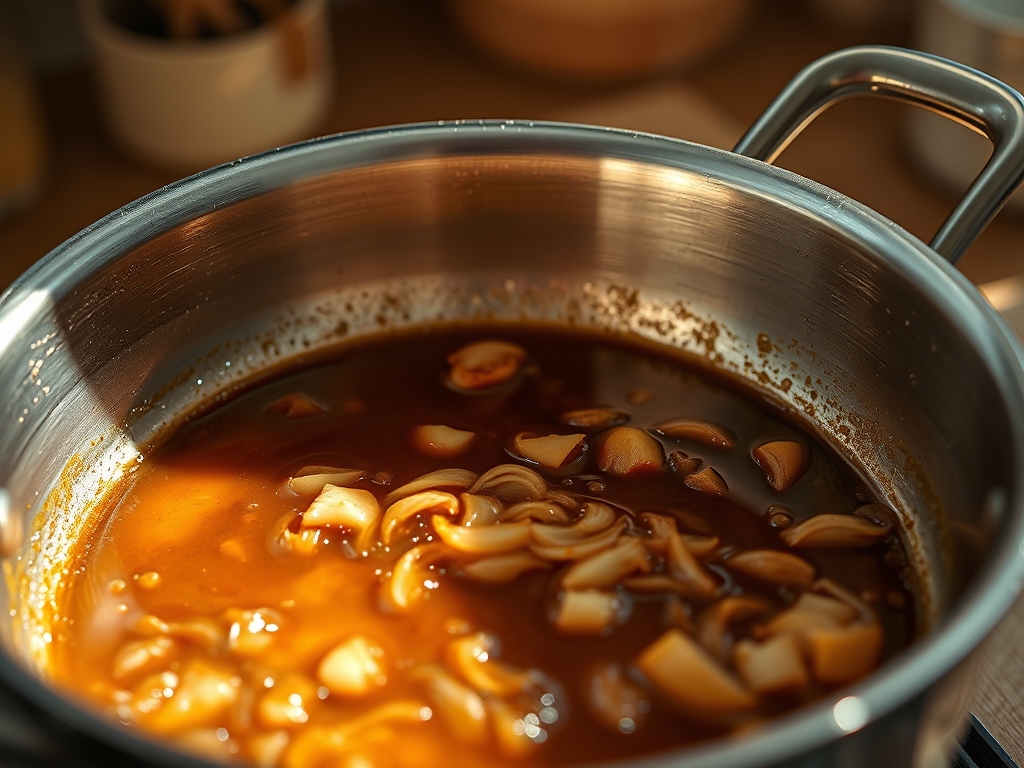
Begin by whisking your buckwheat and wheat flours in a large lacquer bowl (Kibachi). Add 80 percent of your water in a circular motion. Use your fingertips to "rake" the water into the flour, avoiding clumps. You are looking for small, uniform pebbles, not a solid mass.
Pro Tip: Use a digital scale to measure water by weight (grams) rather than volume. The science here is "surface tension management." By distributing water evenly before the dough forms, you ensure every starch granule is primed for gelatinization during the boil.
2. The Aggregation and Kneading (Kikomi)
Once the "pebbles" form, gather the dough into a single mass. Use the "cat's paw" technique to knead the dough, rotating it inward. The goal is to eliminate air pockets and create a smooth, glossy surface.
Pro Tip: Use a bench scraper to keep your work surface pristine. Over-kneading buckwheat leads to a brittle texture because you are shearing the fragile starch bonds. Stop as soon as the surface looks like polished stone.
3. The Rolling Infrastructure (Nobashi)
Dust your board with Uchiko. Flatten the dough into a circle, then transition into a square using a long wooden rolling pin (Menbo). Aim for a uniform thickness of 1.5mm.
Pro Tip: Professional Soba chefs use a saucier or a small brush to lightly moisten the edges if they begin to fray. Maintaining a square shape is not just aesthetic; it ensures that every noodle is the exact same length, preventing uneven cooking times.
4. The Precision Cut (Kiri)
Fold the dough into layers, using plenty of Uchiko between them. Use a specialized Soba-kiri knife and a wooden guide board (Komaita). Shift the board by 1.5mm after every stroke to produce needle-thin strands.
Pro Tip: Do not "saw" the dough. Use a forward-falling motion. The weight of the Soba-kiri knife should do the work. This clean shear prevents the ends from fraying, which would otherwise release too much starch into the boiling water and create a muddy mouthfeel.
Section B: Prep & Timing Fault-Lines:
The most common human error is the "Lag-Time Oxidation." Once the dough is hydrated, the clock starts. If you leave the dough exposed to air for more than five minutes without a damp cloth, the edges will render unusable. Another critical fault-line is the "Crowded Pot." Soba requires a massive volume of water to dilute the surface starches. If the water temperature drops significantly when the noodles are added, they will turn into a gummy paste. Always maintain a rolling boil and have a "Yubune" (cold water shock bath) ready to arrest the cooking process instantly.
THE VISUAL SPECTRUM
Section C: Thermal & Visual Troubleshooting:
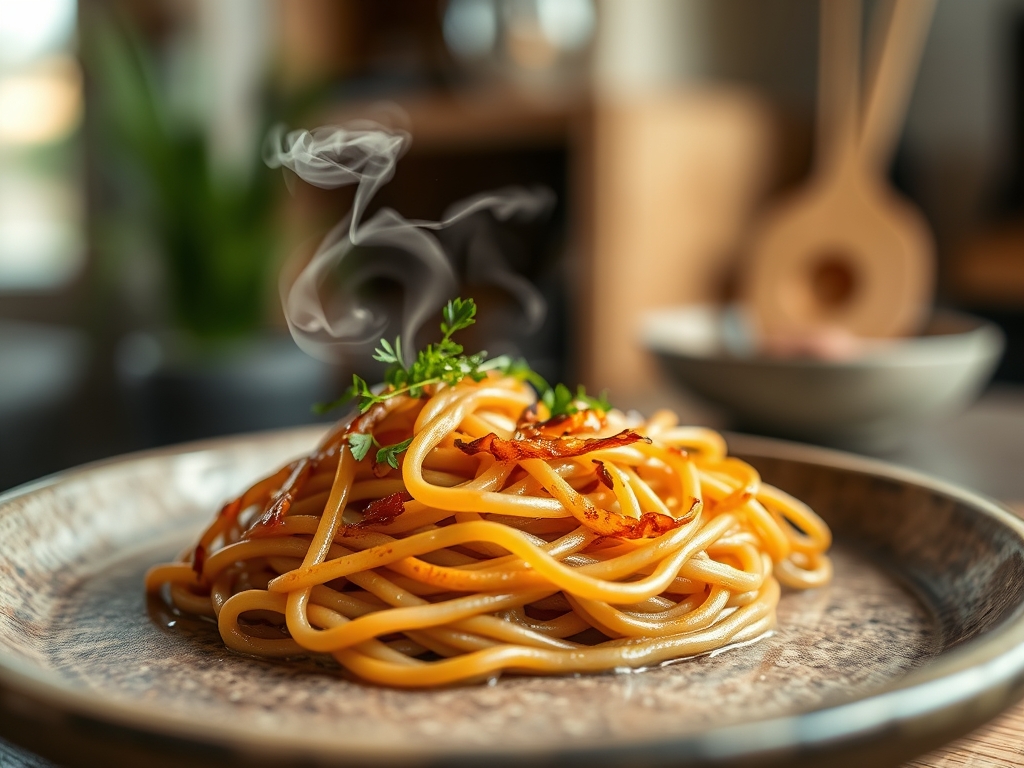
Referencing the Masterclass photo, notice the "matte-grey sheen" of the raw strands. If your noodles appear yellow, your wheat ratio is too high. If they appear translucent after boiling, they are overcooked. The ideal visual cue is a "slight translucency at the edges with an opaque core." If the noodles are snapping into short segments, your rolling was too aggressive, or your hydration was too low. To fix dull colors, ensure your dashi dip is chilled to 4 degrees Celsius; the thermal contrast enhances the visual vibrancy of the buckwheat. If the noodles look "shaggy" or fuzzy, your knife was dull, causing the starch to tear rather than slice.
THE DEEP DIVE
Macro Nutrition Profile:
Buckwheat is a nutritional powerhouse. A single serving provides roughly 12g of protein, 4g of fiber, and a significant dose of Rutin, a bioflavonoid that supports vascular health. Unlike wheat pasta, it has a low Glycemic Index, providing sustained energy without the insulin spike.
Dietary Swaps:
- Vegan: The noodles are naturally vegan. Ensure your dipping sauce uses kombu-only dashi instead of bonito flakes.
- Keto: Authentic Soba is high-carb. For a keto alternative, use shirataki noodles infused with toasted buckwheat tea for flavor.
- Gluten-Free: Switch to "Jyu-wari" (100% buckwheat). This requires boiling water to pre-gelatinize the starch, as there is no gluten to hold it together.
Meal Prep & Reheating Science:
Soba is best consumed within ten minutes of boiling. However, if you must store it, rinse the noodles until the water runs clear to remove all surface starch. Toss with a drop of toasted sesame oil to prevent sticking. To reheat, do not microwave. Flash-boil for 15 seconds or serve cold. Microwaving destroys the molecular moisture barrier, resulting in a "rubbery" texture.
THE KITCHEN TABLE
Why do my noodles break when I lift them?
Your hydration was likely under 40 percent. Buckwheat lacks gluten; it relies on a "starch-paste" bond. If the dough is too dry, the mechanical infrastructure fails. Add water in 5ml increments next time to find the sweet spot.
Can I use regular flour for dusting?
No. Using wheat flour for dusting (Uchiko) will cause the noodles to stick together and create a slimy film when boiled. Coarse buckwheat flour is non-absorbent, acting like tiny ball bearings to keep the strands separate.
What is the purpose of the cold rinse?
The cold rinse is a "thermal shock" that firms the starches and removes excess surface mucilage. Without it, the noodles will have a piquant, "starchy" aftertaste and a gummy texture that ruins the delicate dashi balance.
How do I get that perfect "snap"?
The snap comes from the 20 percent wheat flour and the "shock" of the cold water. Ensure your wheat flour has at least 12 percent protein. This creates just enough tension to resist the bite before the buckwheat dissolves.