Listen up, kitchen operatives. We are moving beyond the realm of casual frying and entering the theater of precision ballistics. The humble cornmeal fritter is often treated as a rustic afterthought; a grease-soaked orb tossed into a basket as a filler. This is a culinary dereliction of duty. To master the perfect fritter, one must understand the fundamental physics of Hush Puppy Density. We are looking for a specific gravity that defies the heavy, leaden lumps of the amateur circuit. The goal is a structural marvel: a rugged, craggy exterior that shatters upon impact, revealing a crumb that is airy, steaming, and remarkably light. This requires a delicate balance of chemical leavening and moisture management. If your batter is too viscous, you end up with a floury brick. If it is too thin, it disintegrates into the oil like a failed satellite. We are aiming for a golden-brown sphere of perfection that maintains its structural integrity from the fryer to the palate. Let us begin the audit.
THE DATA MATRIX
| Metric | Specification |
|---|---|
| Prep Time | 15 Minutes |
| Execution Time | 12 Minutes |
| Yield | 24 Units |
| Complexity (1-10) | 4 |
| Estimated Cost per Serving | $0.45 |
THE GATHERS
Ingredient Protocol:
- 240g / 2 cups Yellow Cornmeal (Stone-ground preferred)
- 120g / 1 cup All-purpose Flour
- 5g / 1 tsp Baking Soda
- 10g / 2 tsp Baking Powder
- 5g / 1 tsp Fine Sea Salt
- 240ml / 1 cup Whole Buttermilk (Full fat)
- 1 Large Egg (Room temperature)
- 50g / 1/2 cup Finely Minced White Onion
- 15ml / 1 tbsp Honey or Granulated Sugar
- 2 liters / 2 quarts Neutral Oil (Grapeseed or Peanut)
Section A: Ingredient Quality Audit:
The primary failure point in cornmeal infrastructure is the age of the grain. If your cornmeal smells like a dusty attic, it has oxidized. This ruins the piquant, sweet profile of the corn. Solution: Always source stone-ground meal and store it in the freezer to preserve volatile oils. Furthermore, if your buttermilk lacks sufficient acidity, the baking soda will not activate. If you suspect your buttermilk is weak, add 5ml of lemon juice to catalyze the reaction. Finally, ensure your egg is not straight from the refrigerator. A cold egg will seize the fats in the batter and inhibit the ability to aerate the mixture during the fold.
THE MASTERCLASS
Step 1: Dry Sifting and Homogenization
Place your cornmeal, flour, and leavening agents into a large stainless steel mixing bowl. Use a fine-mesh sieve to ensure there are no clumps of baking soda. Use a whisk to thoroughly combine the dry phase.
Pro Tip: Use a digital scale to measure by weight rather than volume. Volumetric measurements of flour can vary by up to 20 percent based on how tightly it is packed, which is the leading cause of inconsistent Hush Puppy Density.
Step 2: Aromatics and Moisture Integration
In a separate glass bowl, whisk the egg, buttermilk, and honey until the mixture is a uniform pale yellow. Fold in the finely minced onions. Ensure the onions are minced to a 2mm brunoise to prevent them from creating structural weak points in the fritter.
Pro Tip: Use a professional-grade saucier for your wet ingredients. The rounded bottom allows for more efficient whisking, ensuring the egg proteins are fully denatured and ready to emulsify with the cornmeal.
Step 3: The Fold and Hydration
Create a well in the center of the dry ingredients. Pour the wet mixture in and use a silicone spatula to gently fold the components together. Stop as soon as no dry streaks remain. Do not overwork the batter; we want to avoid gluten development.
Pro Tip: Allow the batter to rest for 10 minutes. This "hydration phase" allows the cornmeal to absorb the buttermilk, ensuring the interior is moist rather than gritty. A bench scraper can be used to clean the sides of the bowl to ensure every gram of batter is utilized.
Step 4: Thermal Calibration and Deployment
Heat your oil in a heavy-bottomed Dutch oven to exactly 185C (365F). Use a small spring-loaded scoop to drop 15ml spheres of batter into the hot oil. Do not overcrowd the vessel.
Pro Tip: Monitor the temperature with an infrared thermometer. If the oil drops below 175C, the batter will absorb excess grease. If it exceeds 195C, the exterior will scorch before the interior can render its moisture into steam.
Step 5: The Golden Extraction
Fry the spheres for 2 to 3 minutes, turning them occasionally with a slotted spoon or spider. They should be a deep, mahogany gold. Remove them and place them on a wire cooling rack rather than paper towels.
Pro Tip: Placing fried goods on paper towels creates a steam pocket that softens the crust. A wire rack allows for 360-degree airflow, preserving the crunch and maintaining the ideal Hush Puppy Density.
Section B: Prep & Timing Fault-Lines:
The most common human error is "The Crowd Effect." Dropping too many units into the oil at once causes a thermal crash. This leads to a soggy, oil-logged interior. Another timing error is mixing the batter too far in advance. Once the buttermilk hits the baking powder, the clock starts. If the batter sits for an hour, the chemical lift is spent, and your fritters will be flat and dense. Aim for a maximum 15-minute window between mixing and frying.
THE VISUAL SPECTRUM
Section C: Thermal & Visual Troubleshooting:
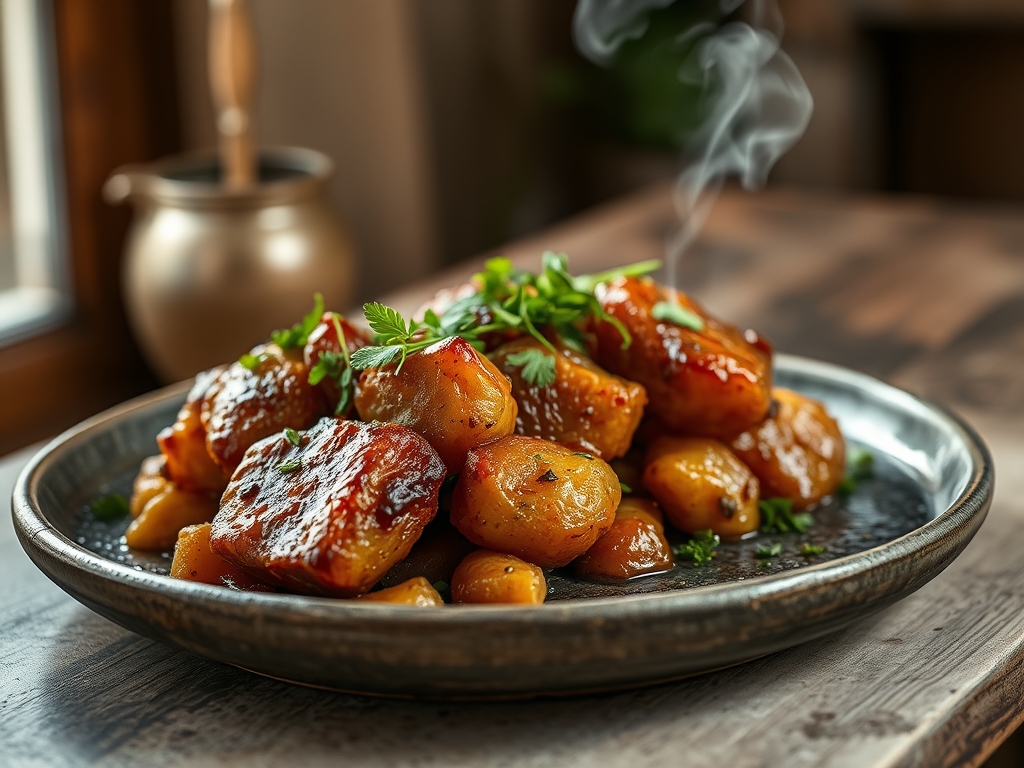
Referencing the Masterclass photo, you should see a "cracked earth" texture on the surface. If your fritters are perfectly smooth, your batter was too thin; add 20g of cornmeal to the next batch. If they are dark brown on the outside but raw in the middle, your oil is too hot. If they appear pale and greasy, your oil temperature is too low. The internal crumb should show small air pockets. If the interior is a solid, yellow mass, you over-mixed the batter and destroyed the aeration.
THE DEEP DIVE
Macro Nutrition Profile:
Per 3-unit serving: 210 Calories, 9g Fat, 28g Carbohydrates, 4g Protein. These are energy-dense units designed for high-output environments.
Dietary Swaps:
- Vegan: Replace the buttermilk with soy milk plus 15ml apple cider vinegar. Substitute the egg with a "flax egg" (15g ground flax mixed with 45ml water).
- Gluten-Free: Swap the all-purpose flour for a 1:1 gluten-free rice flour blend. The cornmeal is naturally GF.
- Keto: This is a grain-based operation; however, one can attempt a "mock" version using almond flour and crushed pork rinds, though the molecular structure will differ significantly.
Meal Prep & Reheating Science:
To maintain the molecular structure, never microwave a hush puppy. The microwave agitates water molecules, turning the interior into a rubbery mess. To reheat, use an air fryer or oven at 200C (400F) for 4 minutes. This re-crisps the exterior lipids while gently warming the core.
THE KITCHEN TABLE
Why are my hush puppies falling apart in the oil?
Your batter lacks structural cohesion. This usually happens if the egg is too small or the batter is too wet. Add a tablespoon of flour to increase the viscous bond of the mixture before the next drop.
Can I use frozen corn instead of onions?
Yes, but you must thaw and pat the corn dry. Excess moisture will create steam pockets that can cause the fritter to explode. Ensure the corn is folded in gently at the final stage to maintain density.
What is the best oil for high-heat frying?
Peanut oil is the gold standard due to its high smoke point and neutral flavor. If allergies are a concern, grapeseed or refined canola oil are excellent secondary options for maintaining clean flavor profiles.
How do I get that perfect spherical shape?
Use a small, mechanical cookie scoop. This ensures every unit has the same mass, leading to uniform cooking times and consistent Hush Puppy Density across the entire batch. Precision tools yield precision results.