Imagine the humid air of the French Quarter thick with the scent of hot grease and caramelized sugar. You are standing before a plate of golden, pillowy squares that seem to defy gravity. This is not just breakfast; it is an exercise in structural integrity and surface tension. The beignet is a high-velocity delivery system for sucrose, and the secret to its legendary status lies in the Beignet Dusting Tech. We are talking about the precise moment when a lipid-slicked surface meets a cloud of micronized sugar. If the temperature is off by five degrees, you get a gummy sludge. If the timing is delayed by ten seconds, the sugar bounces off like hail on a tin roof. We are here to audit the architecture of the fry, ensuring that every bite offers a shattering exterior and a cloud-like interior. Forget the amateur sifter. We are looking for total saturation and a molecular bond that turns a simple fried dough into a legendary culinary artifact. Let us break down the infrastructure of the perfect puff.
THE DATA MATRIX
| Metric | Specification |
|---|---|
| Prep Time | 2 Hours (Includes Proofing) |
| Execution Time | 15 Minutes |
| Yield | 24 Units |
| Complexity (1-10) | 7 |
| Estimated Cost per Serving | $0.45 |
THE GATHERS
Ingredient Protocol:
- 375ml / 1.5 cups Lukewarm Water (approx. 105 degrees F)
- 100g / 0.5 cup Granulated Sugar
- 7g / 2.25 tsp Active Dry Yeast
- 125ml / 0.5 cup Evaporated Milk
- 1 Large Egg (Room Temperature)
- 5ml / 1 tsp Vanilla Extract
- 900g / 7 cups Bread Flour (High Protein)
- 5g / 1 tsp Kosher Salt
- 60g / 4 tbsp Unsalted Butter (Softened)
- Neutral Oil (Peanut or Cottonseed) for frying
- 500g / 4 cups Powdered Sugar (Micronized)
Section A: Ingredient Quality Audit:
The primary failure point in beignet construction is the protein content of the flour. If you utilize standard all-purpose flour, the crumb structure lacks the tensile strength to hold the air pockets required for a hollow center. Switch to High-Protein Bread Flour to ensure a robust gluten network. Furthermore, check your yeast viability. If your water-yeast mixture does not aerate and foam within five minutes, discard it. Old yeast results in a dense, leaden dough that absorbs too much oil. Finally, ensure your evaporated milk is not "lite." You need the specific fat solids to infuse the dough with a rich, velvety mouthfeel that contrasts against the sharp sweetness of the dusting.
THE MASTERCLASS
Step-by-Step Execution:
1. Yeast Activation and Hydration
Combine the lukewarm water, granulated sugar, and yeast in the bowl of a heavy-duty stand mixer. Allow the mixture to bloom until it becomes viscous and frothy.
Pro Tip: Use a digital thermometer to verify the water temperature is exactly 105 degrees F. Anything higher will scald the yeast; anything lower will fail to trigger the metabolic process required for a rapid rise.
2. Emulsifying the Wet Base
Whisk the egg and evaporated milk together before adding them to the yeast mixture. This step ensures that the fats are evenly distributed before the flour introduces gluten-building blocks.
Pro Tip: Use a balloon whisk to vigorously incorporate air into the egg mixture. This pre-aeration assists the yeast in creating the internal "void" that defines a classic New Orleans beignet.
3. Flour Integration and Kneading
Gradually add the bread flour and salt using a dough hook attachment. Once the dough begins to pull away from the sides, add the softened butter one tablespoon at a time until fully incorporated.
Pro Tip: Use a stainless steel bench scraper to clear the sides of the bowl. The dough should be slightly tacky but not stick to your fingers. This indicates the perfect hydration ratio for a light, non-greasy fry.
4. The Primary Proof
Place the dough in a lightly oiled bowl and cover with plastic wrap. Allow it to rise in a warm, draft-free environment for at least two hours or until doubled in size.
Pro Tip: For superior flavor development, utilize a cold-fermentation technique. Place the dough in the refrigerator overnight. The slow fermentation allows the yeast to render complex esters and organic acids, resulting in a more piquant dough profile.
5. Rolling and Precision Cutting
Deflate the dough and roll it out onto a floured surface to a thickness of 1/4 inch. Use a sharp tool to cut the dough into 2-inch squares.
Pro Tip: Avoid using a round cutter. Traditional beignets are square to minimize scrap dough. Re-rolling dough toughens the gluten, leading to a chewy, inferior texture. A pizza wheel or bench scraper is the professional tool of choice here.
6. The Thermal Bath
Heat your oil in a heavy-bottomed saucier or Dutch oven to 370 degrees F. Fry the squares in small batches, flipping them as they puff up to ensure even browning.
Pro Tip: Maintain constant surveillance with an infrared thermometer. If the oil temperature drops below 360 degrees F, the dough will act as a sponge and soak up the grease. If it exceeds 380 degrees F, the exterior will burn before the interior can fully set.
7. Implementing Beignet Dusting Tech
Immediately upon removal from the oil, transfer the beignets to a paper towel for exactly five seconds, then toss them into a bag or bowl filled with a massive quantity of powdered sugar.
Pro Tip: This is the core of Beignet Dusting Tech. The residual surface oil must be hot enough to melt the first layer of sugar, creating a "primer" coat that allows subsequent layers of dry powder to adhere. This creates the signature thick, snowy crust.
Section B: Prep & Timing Fault-Lines:
The most common human error is "crowding the pot." Adding too many dough squares at once causes a massive thermal drop in the oil. This leads to a "grease-logged" beignet that feels heavy on the palate. Another fault-line is the delay in dusting. If the beignet cools for even sixty seconds, the sugar will not stick. You must work in a "fry-and-fly" rhythm. Have your sugar station ready before the first piece of dough touches the oil.
THE VISUAL SPECTRUM
Section C: Thermal & Visual Troubleshooting:
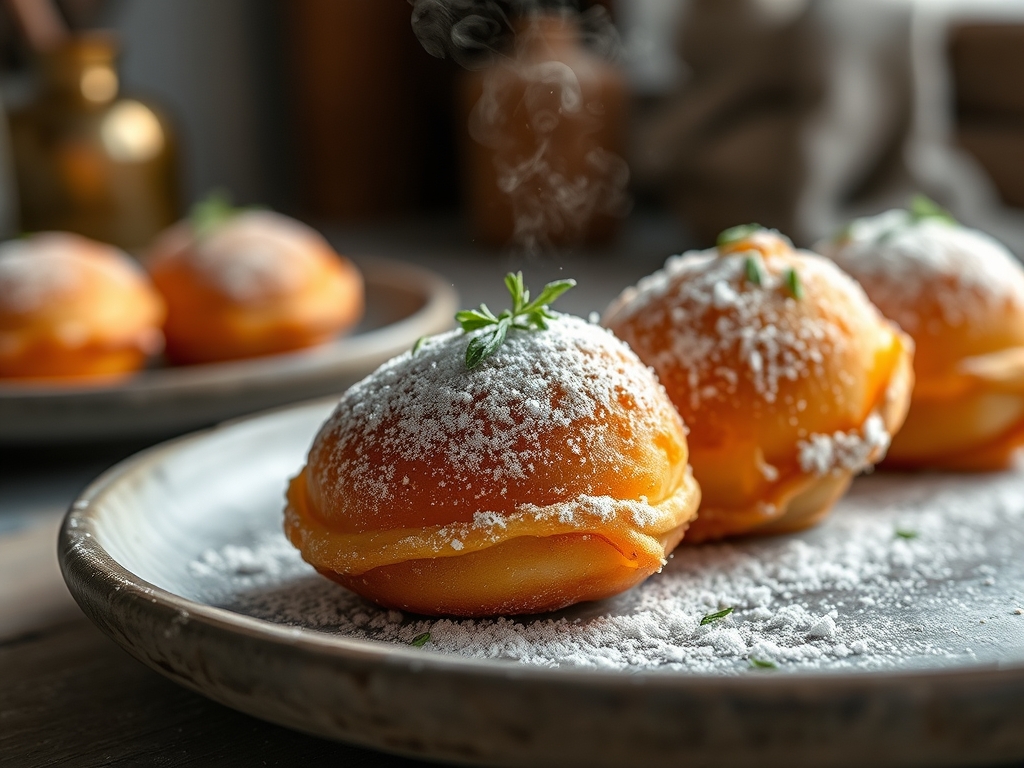
Referencing the Masterclass photo, observe the "Golden Ratio" of browning. The beignet should exhibit a deep amber hue, not a pale tan. If your beignets are pale, your oil temperature is likely too low, or your dough lacks sufficient sugar to trigger the Maillard reaction. If the sugar looks "wet" or transparent, you did not drain the excess oil for those critical five seconds. The goal is a matte, opaque white finish that looks like fresh snowfall. If the beignets are flat rather than puffy, your yeast was likely expired or your dough was rolled too thin, preventing the internal steam from expanding the gluten walls.
THE DEEP DIVE
- Macro Nutrition Profile: A single beignet contains approximately 180 calories, 8g of fat, and 22g of carbohydrates. The high sugar content provides an immediate glucose spike, while the enriched dough offers moderate satiety through fats.
- Dietary Swaps: For a Vegan version, substitute evaporated milk with coconut milk and use a flax-egg. For Gluten-Free requirements, utilize a high-quality 1-to-1 flour blend with added xantham gum, though the internal "hollow" may be less pronounced. Keto beignets are challenging but can be attempted with almond flour and erythritol, though they will lack the traditional "puff."
- Meal Prep & Reheating Science: Beignets are best consumed within minutes of frying. However, to maintain molecular structure for later, do not sugar them. Store the fried shells in an airtight container. To reheat, use an air fryer at 350 degrees F for 2 minutes to recrisp the exterior, then apply the Beignet Dusting Tech immediately.
THE KITCHEN TABLE
Why are my beignets tough and chewy?
This usually indicates over-kneading or using too much flour during the rolling process. Excess gluten development creates a bread-like texture rather than a light pastry. Handle the dough gently and only knead until it is just smooth.
Can I use a different oil for frying?
Peanut oil is the gold standard due to its high smoke point and neutral flavor. You can use vegetable oil, but avoid olive oil or butter, as they will burn at the required 370 degree F threshold.
How do I get the sugar to stay thick?
The key is the double-toss method. Dust them once immediately after frying to create a base layer, then give them a second "vanity" dusting right before serving. This ensures a pristine, white appearance.
My dough didn't rise at all. What happened?
Check your water temperature. If the water was over 115 degrees F, you likely killed the yeast. Alternatively, if your kitchen is cold, the proofing process can take twice as long. Try a warm oven with the light on.