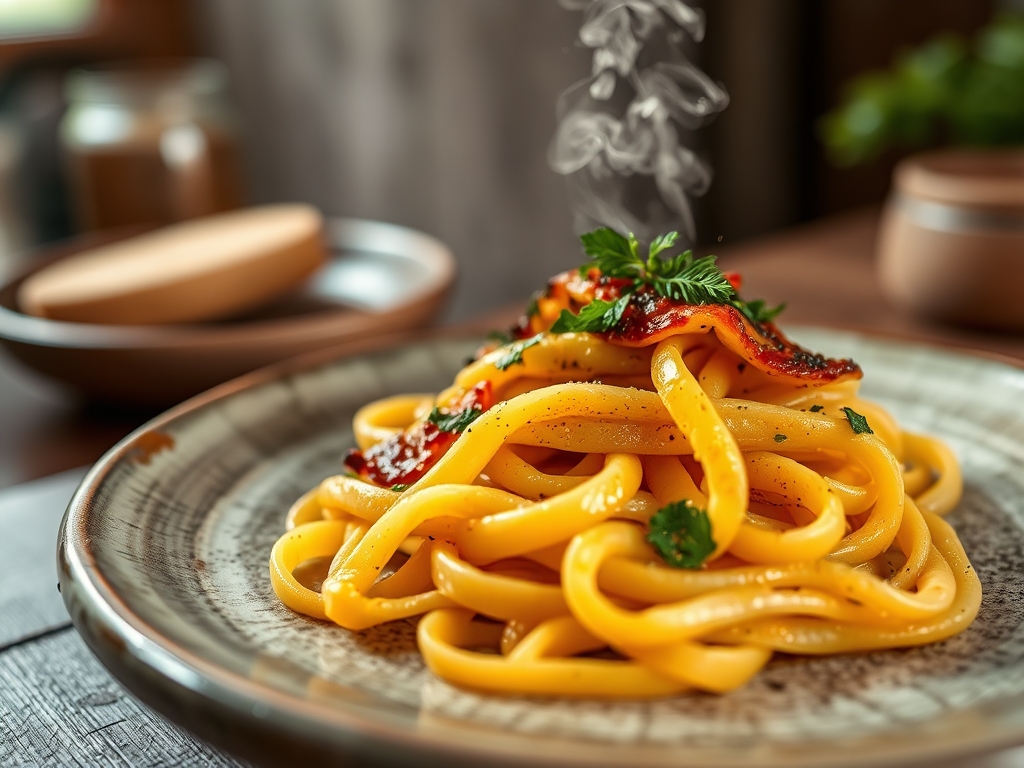
Forget the limp, translucent strands of your local deli. We are here to discuss structural integrity and the sheer mechanical force required to achieve the perfect Pappardelle Torque. When you drape a wide, egg-rich ribbon over a fork, it should not merely hang; it should resist. It should coil with a kinetic energy that speaks to a high-protein flour matrix and a precise hydration ratio. This is the wide-phase elasticity that defines the Tuscan table. We are engineering a surface area designed for maximum sauce adhesion, utilizing the broad width of the noodle to act as a structural dam for heavy, slow-simmered ragus. The torque comes from the tension within the gluten network, developed through aggressive kneading and a controlled rest period. If your pasta collapses under the weight of a boar ragu, you have failed the architectural audit. We are building a foundation of flavor that requires a firm bite and a silky finish. Prepare your bench scraper and calibrate your senses; we are about to re-engineer your understanding of the noodle.
THE DATA MATRIX
| Metric | Specification |
|---|---|
| Prep Time | 45 Minutes |
| Execution Time | 15 Minutes |
| Yield | 4 Servings |
| Complexity (1-10) | 7 |
| Estimated Cost per Serving | $3.50 |
THE GATHERS
Ingredient Protocol:
- 500g / 4 cups Double Zero (00) Flour (High-extensibility grade)
- 300g / 1.25 cups Egg Yolks (Approximately 14-16 large yolks for deep color)
- 15ml / 1 tbsp Extra Virgin Olive Oil (High polyphenol count)
- 5g / 1 tsp Fine Sea Salt
- 50ml / 0.2 cups Warm Water (Reserved for hydration adjustments)
Section A: Ingredient Quality Audit:
The primary failure point in ribbon pasta is the use of All-Purpose flour. AP flour lacks the specific granulometry required for a smooth, elastic sheet. If you find your dough is tearing or feels "shaggy" despite proper hydration, your protein content is likely too low or your flour is too coarse. Technical Fix: Incorporate 10% Semola Rimacinata to increase the tensile strength of the dough. Another common audit failure is "pale pasta syndrome," caused by using industrial grain-fed eggs. If your yolks lack a vibrant orange hue, the resulting pasta will look anemic. Technical Fix: Use pasture-raised eggs or add a pinch of turmeric to the flour to simulate the carotenoid density of high-quality Italian eggs. Finally, if the dough feels brittle, your environment is too dry. Technical Fix: Use a spray bottle to mist the air around your workstation to maintain ambient humidity during the rolling phase.
THE MASTERCLASS
Step-by-Step Execution:
1. The Flour Crater and Hydration Phase
Create a wide well in the center of your flour on a clean wooden board. Pour your yolks and oil into the center. Using a fork, begin whisking the eggs while slowly drawing flour from the inner walls. Pro Tip: Use a digital scale for your yolks rather than counting eggs; yolk size varies wildly and even a 5g discrepancy can ruin your hydration ratio. The goal is to create a viscous slurry before the walls collapse.
2. The Bench Scraper Integration
Once the center is no longer liquid, use a bench scraper to fold the remaining flour over the egg mass. Chop the mixture together until a shaggy mass forms. Pro Tip: The bench scraper is a professional tool designed to keep your hands clean and cool; heat from your palms can prematurely denature proteins, so use the steel blade to do the heavy lifting during the initial incorporation.
3. Developing the Gluten Matrix
Knead the dough by pushing it away with the heel of your hand and folding it back. Continue for 10 minutes until the surface is smooth and "bounces back" when poked. Pro Tip: This is where you establish the Pappardelle Torque. If you stop kneading too early, the pasta will be mushy. You are looking for a matte finish and a firm, elastic resistance.
4. The Molecular Rest
Wrap the dough tightly in plastic wrap and let it sit at room temperature for at least 30 minutes. Pro Tip: During this phase, the flour fully hydrates and the gluten relaxes. Skipping this step makes the dough "snap back" when you try to roll it, leading to uneven thickness and a poor mouthfeel.
5. The Wide-Phase Sheeting
Divide the dough and roll it through a pasta machine or with a heavy rolling pin until you can see the shadow of your hand through the sheet. Cut into ribbons 2.5cm wide. Pro Tip: Use a fluted pastry wheel for "pappardelle ricce" to increase the surface area for sauce capture. The wide width is essential for the structural integrity of the dish.
Section B: Prep & Timing Fault-Lines:
The most dangerous timing error occurs during the "window of oxidation." If you leave your cut pasta exposed to the air for more than 20 minutes without covering it, the edges will become brittle and snap during the boil. Technical Fix: Dust the ribbons with rice flour (which doesn't absorb moisture as quickly as wheat flour) and nest them under a damp kitchen towel. Another fault-line is the "boil-drop." If the water is not at a rolling boil when the pasta hits, the starch will gelatinize into a sticky mess rather than setting firmly. Technical Fix: Use a high-BTU burner and a large stockpot to ensure the water temperature does not plummet when the cold dough is added.
THE VISUAL SPECTRUM
Section C: Thermal & Visual Troubleshooting:
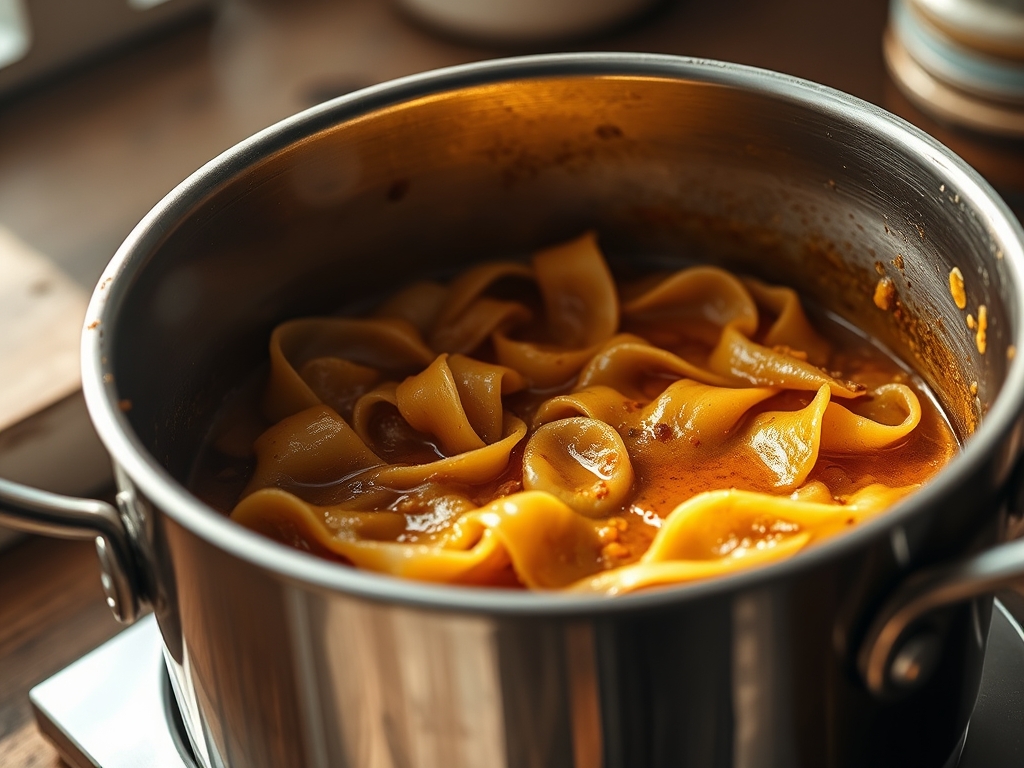
Look at the Masterclass photo: Note the "leathery" sheen and the way the edges of the pasta hold a crisp, defined line. If your pasta looks fuzzy or "hairy" at the edges, your knife was dull or your dough was too wet. Technical Fix: Ensure your bench scraper or knife is honed to a razor edge. If the color is dull or grey, you have likely over-floured the dough during the rolling process. Technical Fix: Use a soft pastry brush to remove excess flour before cutting. If the pasta floats immediately but feels hard in the center, your water lacks sufficient salt to penetrate the starch granules. Technical Fix: Salt your water until it tastes like the Mediterranean Sea; this facilitates the proper thermal transfer required for an even cook.
THE DEEP DIVE
Macro Nutrition Profile:
A standard serving of this egg-rich pappardelle provides approximately 380 calories, 14g of protein, 8g of fat, and 62g of carbohydrates. The high yolk content provides a significant dose of Choline and Vitamin A, making this a nutrient-dense carbohydrate source compared to dried, water-based pastas.
Dietary Swaps:
- Vegan: Replace the 300g of yolks with 200ml of silken tofu blended with 20ml of olive oil and a pinch of kala namak for that "eggy" sulfur scent.
- Keto: This is a high-carb infrastructure project; however, a "Palmini" or cabbage-ribbon substitute can mimic the shape, though it will lack the signature torque.
- Gluten-Free: Use a blend of 70% brown rice flour and 30% tapioca starch, adding 15g of Xanthan gum to provide the necessary elasticity.
Meal Prep & Reheating Science:
To maintain the molecular structure, do not fully cook pasta intended for later use. Blanch for 60 seconds, shock in an ice bath, and coat in olive oil. When reheating, avoid the microwave; the localized agitation of water molecules will turn your ribbons into rubber. Instead, deglaze a pan with a splash of pasta water or stock and toss the ribbons until they reach the "al dente" threshold.
THE KITCHEN TABLE
Why does my pasta break when I boil it?
Your dough was likely too dry or under-kneaded. Without a strong gluten network, the structural "cables" of the pasta cannot hold the weight of the starch as it expands in the boiling water.
Can I use a food processor to mix the dough?
Yes, but be careful not to overheat the motor or the dough. Pulse until it looks like wet sand, then finish kneading by hand to ensure you achieve the correct Pappardelle Torque and elasticity.
How thick should the ribbons actually be?
Aim for approximately 1.5mm. Too thin and you lose the "bite"; too thick and the pasta becomes "leaden." You want a ribbon that can support a heavy viscous sauce without tearing.
What is the best way to store fresh pappardelle?
Air-dry the nests for 2 hours until they feel like parchment, then freeze them in an airtight container. Cooking from frozen preserves the molecular structure better than refrigerating, which can lead to starch retrogradation and a gritty texture.