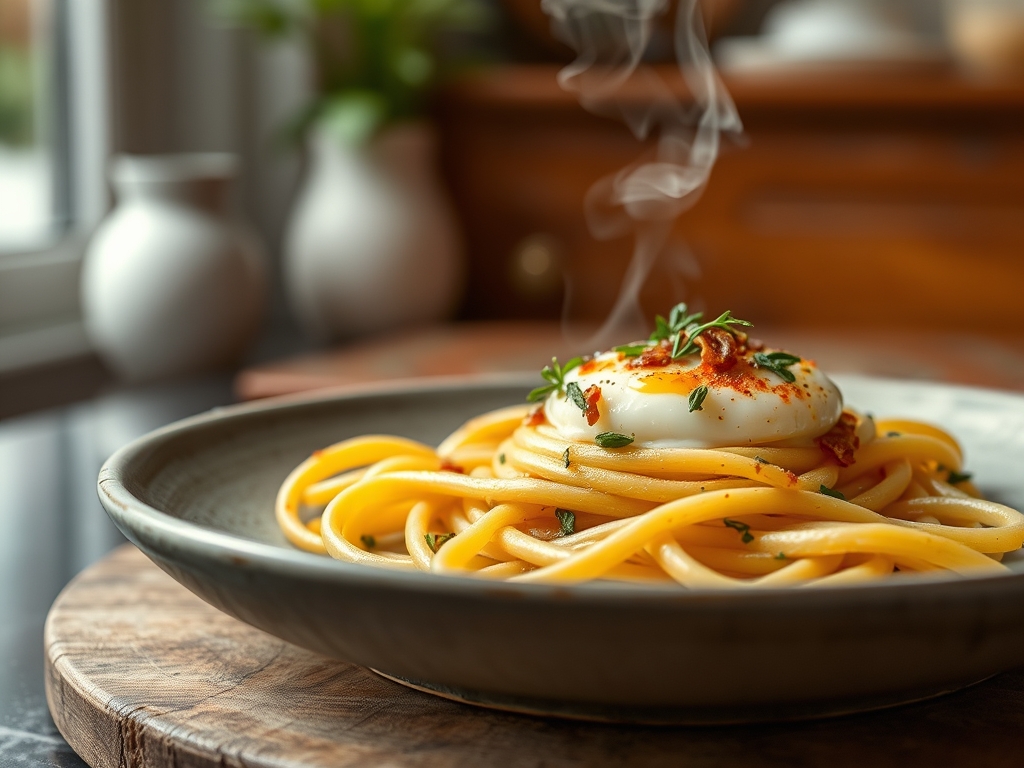
Listen to the sound of steel meeting marble. That rhythmic, percussive thud is the heartbeat of a kitchen operating at peak efficiency. We are not just making dinner; we are engineering a structural masterpiece of protein and starch. Fresh Egg Pasta is the ultimate test of a chef's tactile intelligence. It is a volatile marriage of flour and fat that demands respect for the laws of molecular physics. When you crack those golden yolks into a well of double-zero flour, you are initiating a complex chemical bonding process where albumin acts as the structural mortar for a gluten-reinforced skyscraper. Forget the limp, dehydrated sticks from a cardboard box. We are hunting for that elusive "al dente" snap that only comes from a perfectly hydrated dough. This is about the tension of the roll, the silkiness of the sheet, and the piquant aroma of toasted grain. If your hands aren't tired and your bench isn't dusted with the fine white powder of industry, you aren't doing it right. Let's audit your technique and optimize your output.
THE DATA MATRIX
| Metric | Specification |
|---|---|
| Prep Time | 20 Minutes |
| Execution Time | 45 Minutes (includes rest) |
| Yield | 4 Servings |
| Complexity | 7 / 10 |
| Estimated Cost per Serving | $0.85 USD |
THE GATHERS
Ingredient Protocol:
- 500g / 4 cups "00" Flour (High-protein wheat)
- 250g / 5 Large Egg Yolks (Room temperature)
- 2 Large Whole Eggs (110ml / 0.45 cups)
- 15ml / 1 tbsp Extra Virgin Olive Oil
- 5g / 1 tsp Fine Sea Salt
Section A: Ingredient Quality Audit:
The primary failure point in Fresh Egg Pasta is moisture variance. If your flour is stored in a high-humidity environment, it will resist the uptake of the viscous egg yolks. If your eggs are cold, the lipids will not emulsify properly, leading to a "shaggy" dough that refuses to coalesce.
Technical Fix: Always use a digital scale to measure by weight rather than volume. Volume is a liar. If the dough feels brittle, do not add water; instead, add a teaspoon of olive oil to increase the lipid content without over-hydrating the starch. If the dough is too tacky, your kitchen is likely too warm. Dust your bench scraper with flour and perform a series of rapid folds to incorporate air and lower the surface temperature.
THE MASTERCLASS
1. The Volcano Construction
Create a wide mound of flour on a non-porous surface. Use the bottom of a measuring cup to carve out a deep, structural well. Pour your yolks and whole eggs into the center. This is your reaction chamber.
Pro Tip: Use a digital scale to ensure your yolk-to-white ratio is precise. The albumin in the whites provides the "snap," while the fats in the yolks provide the "silk." A 2:1 ratio of yolks to whole eggs is the gold standard for luxury texture.
2. The Emulsification Phase
Using a fork, begin whisking the eggs in the center of the well. Slowly draw small amounts of flour from the inner walls into the liquid. You are looking to create a thick, slurry-like paste before the walls collapse.
Pro Tip: Do not rush this. If the egg "leaks" through the flour wall, use your bench scraper to aggressively shove the flour back into the center. This prevents the eggs from escaping and drying out on the work surface before they can infuse with the starch.
3. The Kinetic Knead
Once a shaggy mass forms, discard the fork. Use the heels of your hands to push the dough away from you, then fold it back. Repeat this motion with high intensity for at least ten minutes.
Pro Tip: You are looking for gluten development. The dough should transform from a lumpy, matte surface to a smooth, slightly reflective skin. If the dough resists your push, it is telling you the protein chains are tightening. This is the "windowpane" threshold.
4. The Molecular Rest
Wrap the dough tightly in plastic film and let it sit at room temperature for at least thirty minutes. This allows the flour to fully hydrate and the gluten to relax.
Pro Tip: Skipping the rest phase is a critical error. Without this pause, the dough will "snap back" when you try to roll it, making it impossible to achieve the translucent thinness required for high-end Fresh Egg Pasta.
5. The Final Reduction
Divide the dough into four quarters. Use a rolling pin or a pasta machine to flatten the dough into thin sheets. You should be able to see the shadow of your hand through the sheet.
Pro Tip: Keep the unused dough covered. Air is the enemy of elasticity. Use a saucier to prepare your finishing butter or oil while the pasta sits, ensuring the noodles hit the heat the moment they are cut.
Section B: Prep & Timing Fault-Lines:
Temperature control is the silent killer. If your kitchen is over 75 degrees Fahrenheit, the fats in the egg yolks will begin to render out of the dough, making it greasy. Conversely, if the dough is too cold, the gluten will be brittle. Aim for a "Goldilocks" zone of 68 degrees. Furthermore, timing the boil is vital. Fresh pasta cooks in 90 to 120 seconds. If your sauce isn't ready in the saucier before the pasta hits the water, you have already lost the battle against starch retrogradation.
THE VISUAL SPECTRUM
Section C: Thermal & Visual Troubleshooting:
Referencing the Masterclass photo, notice the vibrant, golden hue of the sheets. This is the result of high-quality, carotenoid-rich yolks. If your pasta looks grey or dull, your eggs lacked the necessary pigment or your flour was oxidized.
Uneven Browning: If you are sautéing the pasta and notice splotchy browning, it indicates uneven thickness. The thinner sections are overcooking while the thicker sections remain raw. Ensure your rolling technique is uniform.
Dull Colors: This usually stems from over-flouring during the cutting phase. While flour prevents sticking, an excess will create a chalky film that masks the beautiful yellow of the eggs. Use a soft brush to remove excess dust before the pasta enters the water.
Incorrect Textures: If the pasta is "mushy" rather than "snappy," you likely over-hydrated the dough or under-kneaded it. The gluten network was too weak to hold the structure during the boil.
THE DEEP DIVE
Macro Nutrition Profile:
Fresh Egg Pasta is a protein-dense carbohydrate. A standard serving contains approximately 350 calories, 15g of protein, 5g of fat, and 60g of complex carbohydrates. The high egg content significantly boosts the B-vitamin and choline profile compared to dried alternatives.
Dietary Swaps:
- Vegan: Replace eggs with a slurry of silken tofu and turmeric for color, though you will sacrifice the specific albumin-binding snap.
- Keto: Utilize almond flour and xantham gum. Note that the structural integrity will rely entirely on the gum rather than gluten.
- GF: Use a high-quality 1-to-1 gluten-free flour blend containing rice flour and potato starch. Increase egg count by one to compensate for the lack of wheat protein.
Meal Prep & Reheating Science:
To maintain the molecular structure, do not freeze raw dough. Instead, cut the noodles, dust them heavily with cornmeal, and freeze them in "nests." When reheating, never use a microwave. Flash-boil the frozen nests for 60 seconds to re-gelatinize the starches without turning the proteins into rubber.
THE KITCHEN TABLE
Why is my pasta dough bouncing back when I roll it?
Your gluten is too tense. The dough needs more rest. Wrap it tightly and let it sit for another fifteen minutes at room temperature. This allows the protein bonds to relax, making the sheets more pliable and easier to extend.
Can I use all-purpose flour instead of "00"?
You can, but the texture will be "breadier" and less refined. "00" flour is milled finer and has a specific protein content designed for elasticity. AP flour may result in a thicker, heavier noodle that lacks the signature silkiness.
How do I know when the water is salty enough?
The water should taste like a seasoned broth, not just salt water. Aim for a 1 percent salinity. This seasons the pasta from the inside out as it hydrates and prevents the starch from becoming a bland, sticky mess.
Why did my pasta turn green in the fridge?
This is oxidation. The iron in the egg yolks reacts with the air. While it looks unappealing, it is technically safe if kept cold, but it indicates the dough was not wrapped tightly enough. Always use a double layer of plastic.