Listen to that sound. It is not just a crunch; it is a structural failure of a precision-engineered laminate. We are talking about the Saltine Cracker Tech that defines the very architecture of the snack world. If your crackers lack those iconic craters, you are not baking; you are merely creating sad, leavened tiles. True Saltine Cracker Tech relies on the docking phase, a process where we puncture the dough to release steam in a controlled vapor evacuation. Without these vents, the internal gases expand into massive, uneven bubbles that shatter into dust rather than providing that rhythmic, crisp snap. We are aiming for a viscous dough that has been fermented to the edge of tanginess, then rolled until it is translucent enough to read a technical manual through. This is the audit of the humble soda cracker, elevated to a high-stakes engineering project. We are here to render fat into flour and aerate the crumb through sheer mechanical force. Let us begin the inspection.
THE DATA MATRIX
| Metric | Specification |
|---|---|
| Prep Time | 45 Minutes (Excluding Fermentation) |
| Execution Time | 15 Minutes |
| Yield | 60-70 Crackers |
| Complexity | 7/10 |
| Estimated Cost per Serving | $0.12 |
THE GATHERS
Ingredient Protocol:
- 500g / 4 cups All-Purpose Flour (High protein preferred)
- 5g / 1 tsp Active Dry Yeast
- 240ml / 1 cup Lukewarm Water (Filtered)
- 60g / 4 tbsp Unsalted Butter (Chilled and cubed)
- 5g / 1 tsp Baking Soda
- 10g / 2 tsp Fine Sea Salt
- Coarse Flaky Salt (For topical application)
Section A: Ingredient Quality Audit:
If your flour has a low protein content, the gluten network will collapse, resulting in a cracker that crumbles like shortbread rather than snapping. To fix this, replace 10 percent of the volume with bread flour to increase structural integrity. If your yeast is sluggish, the dough will not infuse with the necessary carbon dioxide, leading to a dense, leaden texture. Always bloom your yeast in 100 degree Fahrenheit water before integration. If the butter is too warm, it will emulsify into the flour immediately; you want distinct micro-pockets of fat to create the lamination effect. Keep all fats at 40 degrees Fahrenheit until the moment of contact.
THE MASTERCLASS
Step-by-Step Execution:
1. The Initial Hydration Phase
Combine the flour, yeast, and water in a large mixing bowl. Use a digital scale to ensure the hydration ratio is exactly 48 percent. Mix until a shaggy mass forms. Cover and allow to ferment for 18 to 24 hours at room temperature.
Pro Tip: This long fermentation allows enzymes to break down starches into simple sugars, which enhances the final Maillard reaction and creates a piquant depth of flavor.
2. The Chemical Integration
Incorporate the chilled butter cubes, baking soda, and fine salt into the fermented sponge. Use a bench scraper to cut the butter into the dough until it resembles coarse sand.
Pro Tip: The baking soda neutralizes the acidity from the long fermentation, ensuring the dough does not become overly sour while also aiding in the browning process.
3. The Laminate Maneuver
Roll the dough out on a lightly floured surface. Fold it into thirds like a letter, rotate 90 degrees, and repeat four times. This creates the microscopic layers required for Saltine Cracker Tech.
Pro Tip: Using a heavy marble rolling pin helps maintain a cold temperature, preventing the fat from melting into the gluten strands prematurely.
4. The Docking Phase
Roll the dough to a thickness of 2 millimeters. Use a docking tool or a fork to create a uniform grid of holes across the entire surface.
Pro Tip: Docking is the most critical step in vapor release; it pins the top and bottom layers of dough together, preventing the cracker from puffing into a pillow.
5. The Thermal Execution
Cut the dough into 2 inch squares using a pastry wheel. Transfer to a perforated baking sheet and sprinkle with coarse salt. Bake at 400 degrees Fahrenheit for 10 to 12 minutes until the edges are golden.
Pro Tip: A perforated baking sheet allows for 360 degree airflow, ensuring the bottom of the cracker is just as crisp as the top.
Section B: Prep & Timing Fault-Lines:
The most common human error is rushing the rolling process. If the dough resists and shrinks back, the gluten is over-stressed. Stop and let it rest for 10 minutes. Temperature control is also vital; if your kitchen is above 75 degrees Fahrenheit, the butter will render too early, destroying the lamination. Use an infrared thermometer to monitor your work surface.
THE VISUAL SPECTRUM
Section C: Thermal & Visual Troubleshooting:
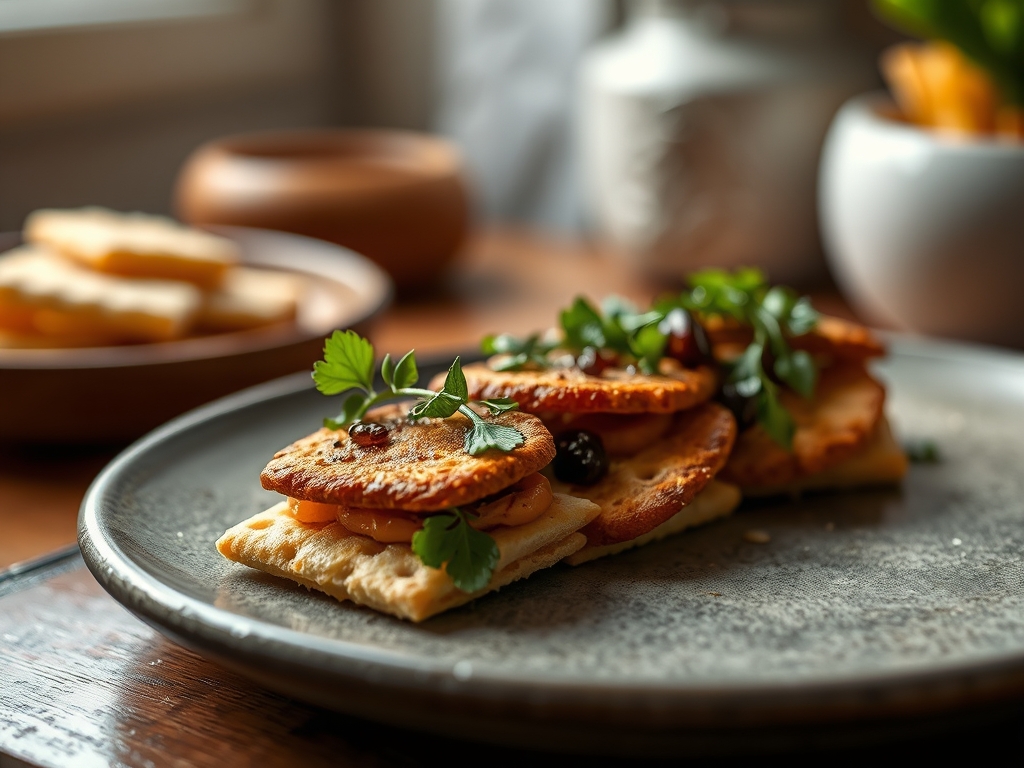
Look at the reference photo. Note the pale, creamy center transitioning to a toasted almond hue at the very edges. If your crackers are a uniform, dark brown, you have over-caramelized the sugars, which will result in a bitter finish. If they are stark white, the baking soda was likely omitted or old. The "look" of a perfect saltine includes distinct, small craters from the docking tool that are slightly darker than the surrounding dough. If the holes have closed up, your dough was too wet or your docking tool was too blunt. A perfect cracker should look matte, not shiny, indicating a dry, crisp surface.
THE DEEP DIVE
Macro Nutrition Profile:
Each cracker contains approximately 25 calories, 0.8g of fat, 4g of carbohydrates, and 0.5g of protein. While low in calories, the high glycemic index means they provide rapid energy.
Dietary Swaps:
For a vegan version, substitute the butter with chilled coconut oil or a high-quality vegan butter block. For a Gluten-Free alternative, use a 1-to-1 flour blend containing xanthan gum, though you must increase the docking frequency to compensate for the lack of gluten elasticity. Keto versions require almond flour and egg white binders, though the snap will be less pronounced.
Meal Prep & Reheating Science:
To maintain the molecular structure, store in an airtight glass container with a desiccant pack. If they lose their snap due to humidity, "re-flash" them in a 300 degree Fahrenheit oven for 3 minutes to evaporate any absorbed moisture. Do not microwave; this vibrates water molecules and turns the starch structure rubbery.
THE KITCHEN TABLE
Why do my crackers taste like flour?
You likely skipped the long fermentation or under-salted the dough. The 24 hour rest is non-negotiable for flavor development. Salt must be both inside the dough and on the surface to provide a balanced profile.
Can I use a pasta machine to roll the dough?
Absolutely. A pasta machine is the ultimate tool for Saltine Cracker Tech. It ensures a perfectly uniform thickness that is nearly impossible to achieve by hand, leading to a more consistent bake across the entire batch.
My crackers are tough instead of crispy. What happened?
You likely over-worked the dough during the folding phase. While lamination is key, excessive handling develops too much gluten. Aim for just enough folds to create layers without turning the dough into a rubber band.
Why is the salt falling off after baking?
You must apply the coarse salt immediately after docking while the dough is still slightly tacky. If the surface has dried out, a very light mist of water will help the crystals adhere before they hit the oven.