Listen up, kitchen operatives. We are not just boiling water; we are engaging in a high-stakes structural assembly of semolina spheres. Forget the soggy, clumped disasters of your past. We are talking about the ultimate architectural feat of the pantry: Couscous Grain Tech. When executed with precision, these tiny grains transform from inert dust into a fluffy, cloud-like matrix that captures flavor in every interstitial space. The sensory profile is a violent collision of aromatic steam and delicate resistance. Imagine the scent of toasted wheat hitting a hot saucier, followed by the hiss of a seasoned liquid being absorbed into the very soul of the grain. This is the gold standard of side dishes. It is a textural masterpiece that demands respect for its surface area to volume ratio. If you treat it like a mindless starch, it will punish you with a gummy, leaden texture. If you treat it like the engineering marvel it is, you will unlock a world of culinary utility that bridges the gap between casual dining and high-end gastronomy.
THE DATA MATRIX
| Metric | Specification |
|---|---|
| Prep Time | 5 Minutes |
| Execution Time | 10 Minutes |
| Yield | 4 Servings |
| Complexity (1-10) | 3 |
| Estimated Cost per Serving | $0.85 |
THE GATHERS
Ingredient Protocol:
- 250g / 1.5 cups Dry Semolina Couscous (Fine or Medium Grain)
- 375ml / 1.5 cups Low-Sodium Chicken or Vegetable Stock
- 30ml / 2 tbsp Extra Virgin Olive Oil or Unsalted Butter
- 5g / 1 tsp Sea Salt
- 2g / 0.5 tsp Freshly Cracked Black Pepper
- 15g / 0.25 cup Fresh Flat-Leaf Parsley (Finely Chiffonaded)
- 10ml / 2 tsp Lemon Zest (Microplaned)
Section A: Ingredient Quality Audit:
The primary failure point in Couscous Grain Tech is the use of stale, oxidized semolina. If your dry grain smells like old cardboard, the lipid content has turned; discard it immediately. If your stock is overly salted, the osmotic pressure will prevent the grain from hydrating evenly, leading to a crunchy core. Technical fix: Always taste your liquid before it hits the pan. If it is too salty, dilute with filtered water until the salinity is balanced. Furthermore, if your olive oil lacks that piquant bite, it will fail to infuse the grains with the necessary floral notes. Always use a high-quality, cold-pressed oil to ensure the fats adequately coat each individual pearl to prevent clumping.
THE MASTERCLASS
Step 1: The Thermal Priming
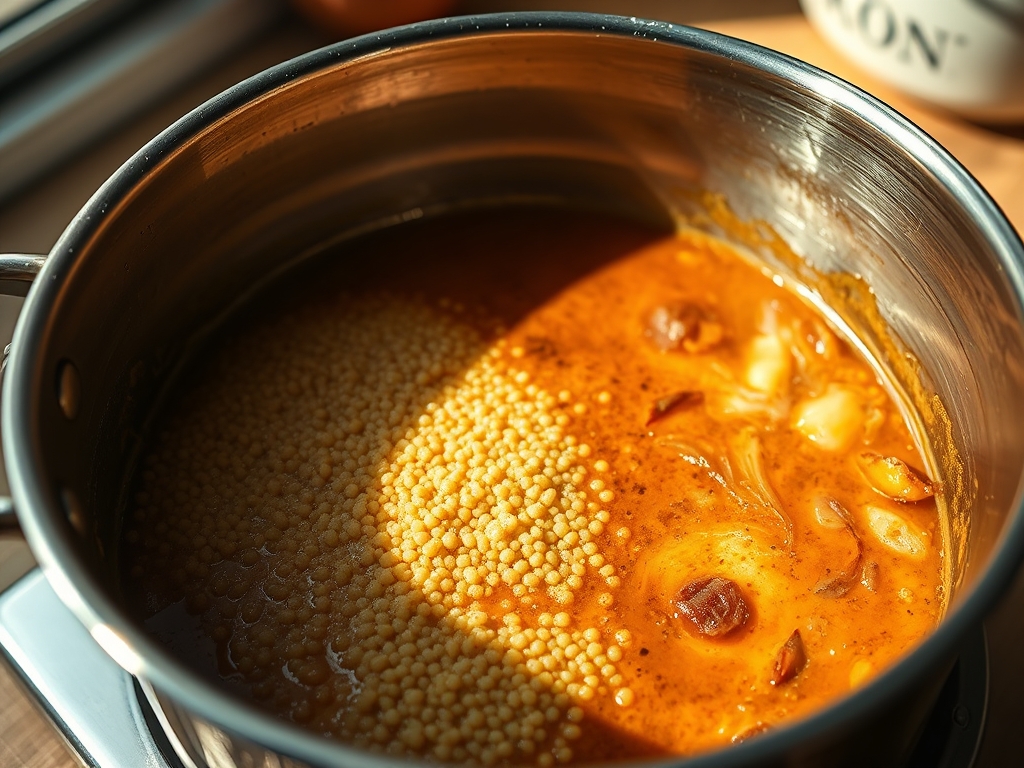
Place a heavy-bottomed saucier over medium-high heat. Add your olive oil or butter and wait for it to shimmer. Add the dry couscous directly to the fat and toast the grains for 2 minutes, stirring constantly with a heat-resistant spatula or bench scraper.
Pro Tip: This stage initiates a mild Maillard reaction on the surface of the semolina. By coating the grains in fat before adding liquid, you create a hydrophobic barrier that ensures each grain remains distinct rather than fusing into a singular mass.
Step 2: The Liquid Injection
In a separate vessel, bring your stock to a rolling boil. Once the couscous smells nutty, pour the boiling liquid over the grains. Immediately remove the pan from the heat source and cover it with a tight-fitting lid or a heavy plate to seal in the steam.
Pro Tip: Accuracy is non-negotiable. Use a digital scale to measure your liquid-to-grain ratio. Even a 5 percent deviation in moisture can result in a "soupy" texture or under-hydrated pellets that irritate the palate.
Step 3: The Hermetic Seal
Allow the grains to sit undisturbed for exactly 5 minutes. Do not lift the lid. The residual heat is currently working to aerate the starch molecules, allowing the liquid to penetrate the center of each grain via capillary action.
Pro Tip: Resistance is key. If you peek, you lose the steam pressure required for even hydration. Professional chefs use this time to prep their garnishes, ensuring the thermal energy remains trapped within the vessel.
Step 4: The Mechanical Abrasion
Remove the lid and use a fork or a professional-grade offset spatula to fluff the grains. Start from the edges and move toward the center, lifting and separating the pearls. Fold in your lemon zest and fresh herbs at this stage.
Pro Tip: This is the "abrasion" part of the tech. You are manually breaking the weak starch bonds that formed during the resting phase. This allows the grains to render a light, airy texture that is the hallmark of expert preparation.
Section B: Prep & Timing Fault-Lines:
The most common human error is the "Cold Liquid Crisis." Adding lukewarm stock to the grains will result in a pasty, glue-like consistency because the starch granules swell too slowly and burst. Another timing error is over-resting; if the couscous sits for more than 10 minutes before fluffing, the ambient temperature drops, and the starches begin to retrogradate, making the grains clump together permanently. Use a digital timer to ensure you hit the 5-minute mark exactly.
THE VISUAL SPECTRUM
Section C: Thermal & Visual Troubleshooting:
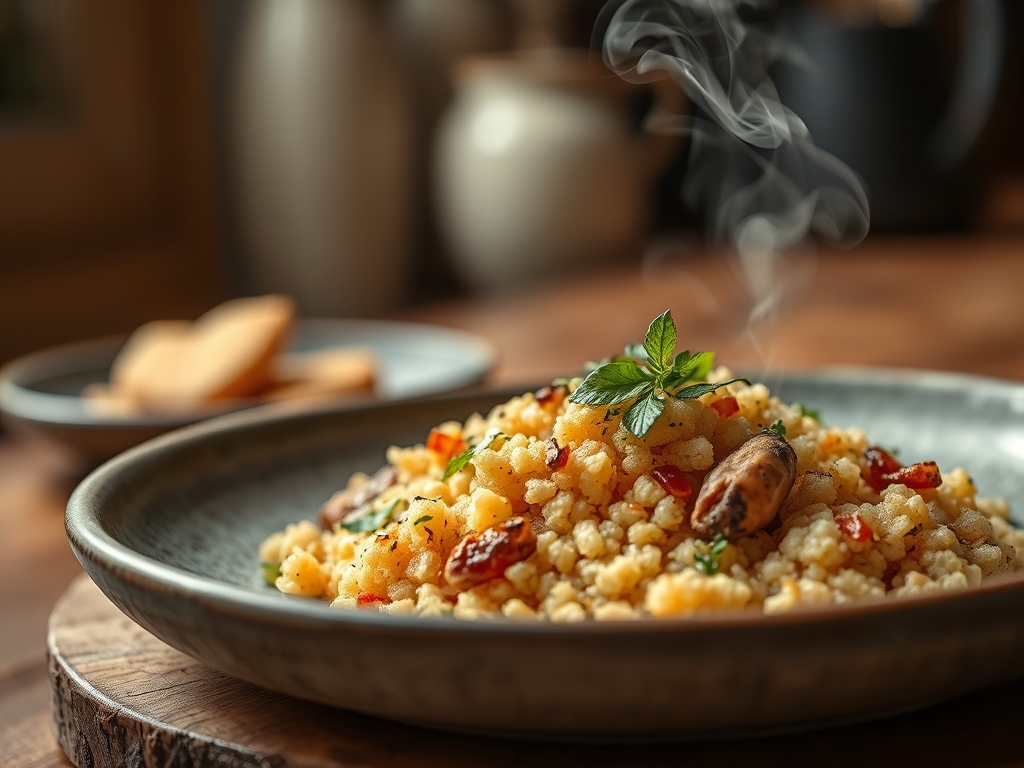
Referencing the Masterclass photo, your final product should exhibit a vibrant, golden-yellow hue with visible separation between every single grain. If your couscous looks dull or grey, your stock was likely under-seasoned or your grains were old. If you see uneven browning, your initial toasting phase in the saucier was inconsistent; you must keep the grains moving. If the texture looks "wet" in the photo, you have over-saturated the matrix. The ideal visual cue is a matte finish on the grain surface with tiny flecks of green herb and yellow zest providing a high-contrast aesthetic. If the herbs look wilted or brown, you added them too early while the steam was too intense.
THE DEEP DIVE
Macro Nutrition Profile
A standard serving of this Couscous Grain Tech provides approximately 200 calories, 6g of protein, 36g of carbohydrates, and 5g of healthy fats. It is a dense source of selenium, a powerful antioxidant that supports cellular health.
Dietary Swaps
- Vegan: Ensure the use of vegetable stock and high-quality olive oil instead of butter.
- Keto: Traditional semolina is high-carb; swap for "cauliflower couscous" (finely pulsed cauliflower) and reduce steaming time to 2 minutes.
- GF: Use certified gluten-free maize or rice-based couscous, though be aware the mechanical abrasion needs to be gentler as these grains are more fragile.
Meal Prep & Reheating Science
To maintain the molecular structure during reheating, do not use a microwave without a moisture shield. Place the couscous in a pan with 15ml of water, cover, and heat on low. This re-introduces steam to the starch matrix, preventing the grains from becoming desiccated and brittle.
THE KITCHEN TABLE
Why is my couscous always clumpy?
You are likely skipping the toasting phase or using too much liquid. Coating the grains in fat before adding moisture is the only way to ensure individual grain integrity. Always measure your liquid with a digital scale for total precision.
Can I use cold water instead of boiling stock?
Absolutely not. Cold water fails to trigger the necessary starch gelatinization. You will end up with a gritty, inedible mess. The liquid must be at a rolling boil to properly penetrate the semolina's dense outer shell.
What is the best tool for fluffing?
A simple fork is the traditional choice, but a professional offset spatula or a carving fork provides better leverage for separating grains without crushing them. Avoid using a spoon, which tends to mash the delicate pearls together.
How do I add more flavor to the base?
You can deglaze the pan with a splash of white wine before adding the stock, or infuse the boiling liquid with aromatics like garlic cloves, bay leaves, or cinnamon sticks. Just remember to strain them out before the final fluffing.